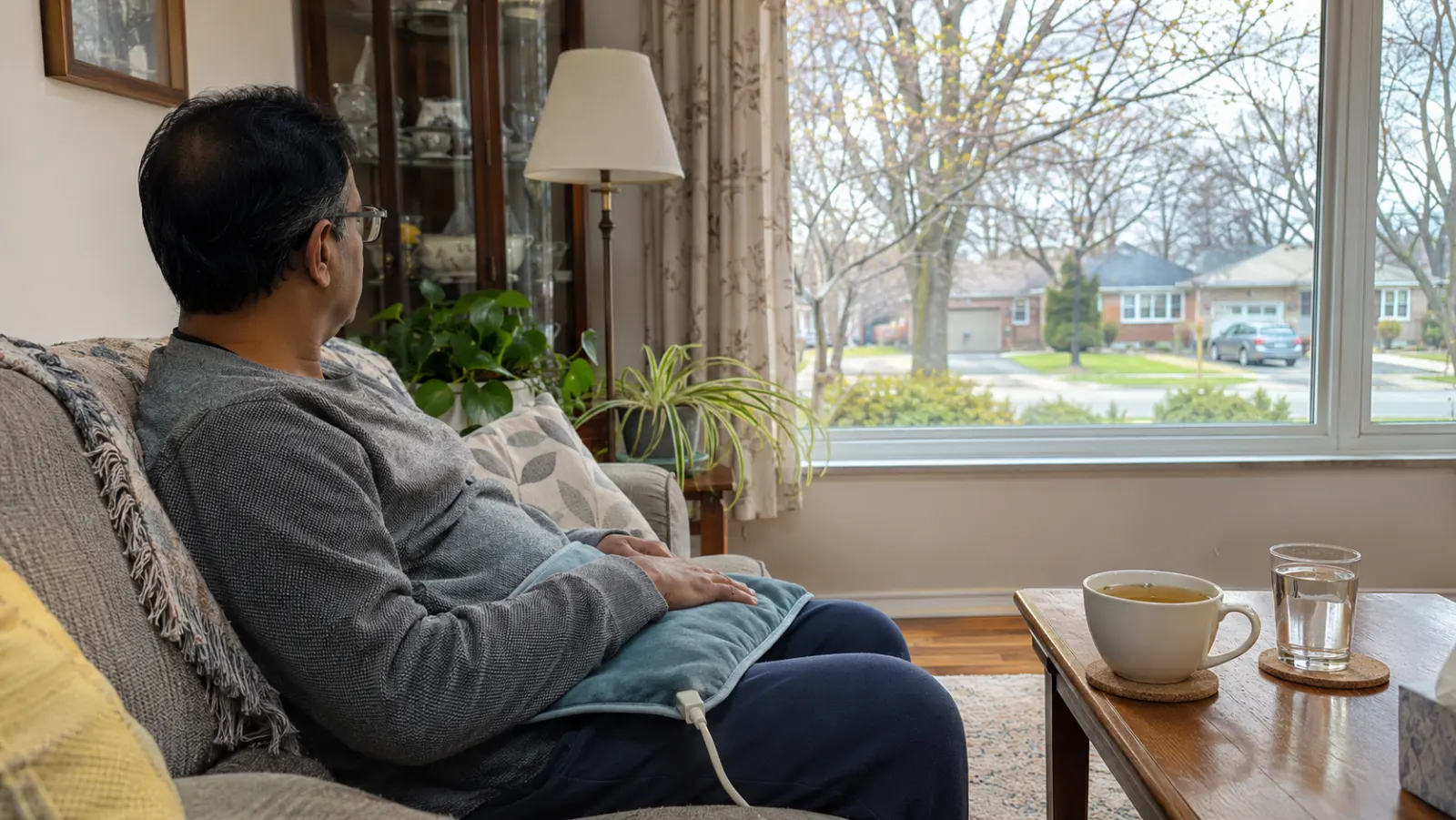
Most belly aches come and go within a day. Diverticulitis tends to behave differently. The pain usually settles into one spot, low on the left side of the abdomen, and stays there. It may start as a dull ache and sharpen over a day or two. Then a low-grade fever arrives, your appetite disappears, and walking to the bus stop on Eglinton feels like more effort than it should.
Diverticulitis is a common reason for adults, especially those in middle age and beyond, to end up at a walk-in clinic or emergency department. The good news is that most cases are mild and settle with rest, a gentler diet for a few days, and close follow-up. The less welcome news is that a minority of cases become complicated, and those need hospital care quickly.
This article explains what diverticula are, why they sometimes become inflamed, what treatment usually looks like today (which has changed in recent years), how to bring fibre back once you are recovering, and which symptoms mean you should go to an emergency department instead of waiting for an appointment in Scarborough.
Pouches in the bowel wall: diverticulosis versus diverticulitis
The colon, or large bowel, is a muscular tube. Over the years, small weak spots in its wall can bulge outward and form little pouches called diverticula. Having these pouches is called diverticulosis. It is very common as people get older, and most people with diverticulosis never know they have it. It is often found by chance during a colonoscopy or a CT scan done for another reason.
Diverticulitis is what happens when one or more of those pouches becomes inflamed, and sometimes infected. In North America, the pouches tend to form in the lower part of the colon on the left side, called the sigmoid colon. That is why the classic pain sits in the lower-left belly. People of some backgrounds, including many with East Asian heritage, are more likely to develop pouches on the right side, which can make the pain feel more like appendicitis. In a community as varied as Scarborough, that detail matters: right-sided pain is not automatically the appendix.
Why the pouches become inflamed
The exact trigger is not fully understood. It used to be blamed entirely on a small piece of stool getting stuck in a pouch, but current thinking points to a mix of factors, including changes in the gut’s bacteria, low-grade inflammation and pressure inside the colon. Things that seem to raise the risk include:
- Getting older
- A diet low in fibre and high in red and processed meat
- Being physically inactive
- Carrying extra weight, particularly around the waist
- Smoking
- Regular use of some medications, such as anti-inflammatory painkillers (like ibuprofen or naproxen), steroids and opioids
- A family history of diverticular disease
You may have heard that people with diverticula should avoid nuts, seeds, popcorn and corn. That advice was common for decades, but research has not supported it, and most people no longer need to cut these foods out. Ask your clinician if you have been told otherwise in the past.
What diverticulitis feels like
Symptoms vary, but a typical episode includes:
- Steady pain and tenderness in the lower-left abdomen, often lasting more than a day, and worse when you press on it, move or cough
- Fever or chills, usually low-grade
- Nausea, sometimes vomiting
- Loss of appetite
- A change in bowel habit, either constipation or diarrhea
- Bloating or a feeling of fullness
- Sometimes a burning or urgent feeling when passing urine if the inflamed bowel sits close to the bladder
Unlike cramping from a stomach bug, which comes in waves and moves around, diverticulitis pain tends to be constant and localized. Unlike irritable bowel symptoms, it usually comes with signs that something inflammatory is happening, such as fever or feeling generally unwell.
Other conditions that can look similar
Lower belly pain has many possible causes. Depending on your age and sex, a clinician will also think about a urinary tract infection, kidney stones, constipation, inflammatory bowel disease, ovarian cysts, ectopic pregnancy, hernias and, rarely, colon cancer. That is one reason why self-diagnosing a “diverticulitis flare” at home, especially the first time, is not a good idea.
Go to the emergency department for these warning signs
Mild diverticulitis can often be managed at home with a clinician’s guidance. Complicated diverticulitis cannot. Complications include an abscess (a pocket of pus next to the bowel), a perforation (a hole in the bowel wall), a blockage of the bowel, a fistula (an abnormal connection to the bladder or another organ) and bleeding.
Go to the nearest emergency department, or call 911 if you are very unwell, if you have:
- Severe pain, pain that spreads across the whole belly, or a belly that is hard and rigid to the touch
- High fever, shaking chills, or a fever that keeps rising
- Vomiting that will not stop, or you cannot keep fluids down
- No bowel movements and no gas, with a swollen belly
- A large amount of blood or clots from the rectum, or black, tarry stools
- Dizziness, fainting, a racing heart or confusion
- Air or stool in the urine, or urine that looks cloudy with bubbles, which can signal a fistula
- Symptoms getting worse after two or three days of treatment instead of better
People who are older, frail, pregnant, taking steroids, on chemotherapy or otherwise have weakened immunity should have a lower threshold for going straight to hospital, because complications can be quieter and progress faster in these groups.
How diverticulitis is assessed
If your symptoms are mild and you are able to eat and drink, a same-day visit is a reasonable first step. Our walk-in clinic can assess lower belly pain and decide whether it is safe to manage at home or whether you need to be sent to hospital.
Questions and examination
Expect questions about where the pain started, how long it has lasted, whether it has spread, and whether you have fever, vomiting, urinary symptoms or blood in your stool. A clinician will check your temperature, pulse and blood pressure and gently examine your abdomen for tenderness, swelling or signs of irritation of the lining of the belly.
Tests
Blood work can show signs of inflammation or infection, and a urine test can help rule out a urinary infection or kidney stone. People who could be pregnant will usually be offered a pregnancy test. HealthSmart Medical can provide requisitions for blood work at a community lab.
A CT scan of the abdomen is the main imaging test for diverticulitis. It confirms the diagnosis and shows whether there are complications such as an abscess. It is not always needed for a mild, typical episode in someone who has had diverticulitis before, but it is usually recommended for a first episode, severe symptoms or anything unusual. We do not perform imaging on site; scans are done at an imaging centre or in hospital, and if you are being sent to emergency, the CT will usually be done there.
Treatment: what has changed
Mild, uncomplicated episodes
For many years, every case of diverticulitis was treated with antibiotics. Current evidence shows that many healthy people with mild, uncomplicated diverticulitis recover just as well without them, using rest, pain relief and a short period of a clear or low-residue diet. Antibiotics are still used for many patients, especially those with fever, signs of more significant infection, other health conditions, older age or weakened immunity. Your clinician will make that call based on your situation, so do not be surprised if you leave without a prescription, or with one.
Typical home care for a mild episode looks like this:
- Rest for a few days and avoid heavy lifting or intense exercise
- Clear fluids at first if your belly is very sore, such as broth, water, clear juice and herbal tea, then moving to soft, easy foods as you feel better
- Acetaminophen for pain, unless your clinician advises otherwise. Anti-inflammatory painkillers like ibuprofen are generally avoided in diverticulitis.
- Taking any prescribed antibiotics exactly as directed, finishing the course unless told otherwise
- Watching for the warning signs listed above, and checking your temperature
Most people start to feel noticeably better within two or three days. If you are not improving by then, or if you are getting worse, you need to be reassessed promptly.
Complicated diverticulitis
People with an abscess, perforation or other complication are usually treated in hospital with intravenous antibiotics and fluids. A small abscess may settle with antibiotics alone; a larger one may be drained with a needle guided by imaging. Some people need surgery, either urgently or planned for later.
Surgery after repeated episodes
Surgery to remove the affected segment of colon used to be recommended routinely after two attacks. That is no longer the case. Today, the decision is individual and depends on how often episodes happen, how severe they are, how much they affect your life, and whether there have been complications. If this is a question for you, your family doctor can arrange a referral to a specialist, such as a general surgeon or gastroenterologist.
Bringing fibre back after recovery
This part often confuses people. During a flare, a gentle, lower-fibre diet is easier on a sore bowel. Once the episode has settled, usually after a few days to a week or as your clinician advises, the goal flips: a diet rich in fibre is linked to a lower risk of future episodes.
Go slowly
Adding a lot of fibre all at once can cause gas and bloating. Increase it gradually over a few weeks, and drink more water as you do, since fibre works best with plenty of fluid.
Practical sources
You do not need special products. Everyday foods found in Scarborough grocery stores and markets work well:
- Legumes: lentils, chickpeas, kidney beans, black beans and split peas in soups, curries, dals and stews
- Whole grains: oats, barley, brown rice, whole wheat roti or bread, and bulgur
- Vegetables: leafy greens, broccoli, carrots, squash, okra and spring vegetables as they arrive in April and May
- Fruit: pears, apples, berries, oranges and bananas, with skins on where you can
- Nuts and seeds, in moderation, unless you have been specifically told to avoid them
A fibre supplement, such as psyllium, can help if you struggle to get enough from food. Check with your clinician or pharmacist first, especially if you take other medications.
Other habits that help
- Move more. Regular physical activity is associated with fewer episodes. With the snow finally gone, spring is a good time to start a daily walk around the neighbourhood or along one of Scarborough’s ravine trails.
- Limit red and processed meats and lean more on fish, poultry and plant proteins.
- Stop smoking if you smoke.
- Review your medications. If you use anti-inflammatory painkillers often, ask whether there is a safer alternative.
- Work toward a healthy weight if that is a goal for you.
The follow-up colonoscopy question
After a first episode of diverticulitis, especially one confirmed by CT with complications, your doctor may recommend a colonoscopy several weeks later, once the inflammation has settled. The reason is that a small number of cancers can look like diverticulitis on a scan. Whether you need one depends on your age, the type of episode, your symptoms and when you were last screened. Your doctor can confirm current Ontario guidance and arrange a referral if it is appropriate.
A colonoscopy is not done during an active flare, because the inflamed bowel is more fragile.
Living with diverticular disease long term
Many people have one episode and never another. Others have occasional flares over the years. A few develop ongoing symptoms like bloating and discomfort even between attacks. Knowing your own pattern helps:
- Keep a note of when episodes happen, what the symptoms were, and how they were treated
- Learn your early signs so you can seek care sooner
- Bring any recurring or lingering symptoms to a regular appointment rather than waiting for the next flare
- Do not treat yourself with leftover antibiotics from a previous episode
If you also have other long-term conditions, such as diabetes or heart disease, managing those well supports your overall recovery. Regular visits for chronic disease management are a good opportunity to talk about your bowel health too.
Getting checked for lower-left belly pain in Scarborough
Pain that settles low on the left side and comes with a fever deserves a proper assessment, even if you have had diverticulitis before and think you know what it is. Most episodes are mild and settle well, but the difference between a mild flare and a complicated one is not something to guess at home.
HealthSmart Medical sees adults with digestive complaints every day in Scarborough. We can assess your symptoms, arrange blood work and imaging requisitions, follow up on your recovery, and refer you to a specialist when needed. Visit us at 2425 Eglinton Ave. East, Unit 12, call 416-757-7117, or book online. If your pain is severe, your belly is rigid, or you have a high fever with vomiting, go to the emergency department instead.
This article is for general information and is not a substitute for medical advice. If you have severe or worsening symptoms, call 911 or go to the nearest emergency department.