Ask someone living with diabetes what they worry about, and you will hear about blood sugar numbers, pills, insulin, maybe their eyes or kidneys. Feet rarely make the list. Yet feet are where some of the most serious, and most preventable, complications of diabetes begin. A small blister from new shoes, a crack in dry winter skin, or a pebble in a boot can go unnoticed for days when the nerves in the feet have stopped sending clear signals. That unnoticed spot can become an ulcer, an infection, and in the worst cases, a reason for amputation.
November 14 is World Diabetes Day, a good moment to talk about the part of diabetes care that happens at the end of the bed each night with a mirror and a bit of attention. Many families in Scarborough have at least one person managing type 1 or type 2 diabetes, often a parent or grandparent in a multigenerational home. This article focuses on one specific piece of that picture: nerve damage in the feet, and the daily habits that protect them.
If you are looking for broader guidance on meals, activity and medication, that belongs in a separate conversation with your doctor. Here we are going to stay close to the ground.
What diabetic neuropathy actually is
Neuropathy means nerve damage. Over time, high blood sugar injures the small blood vessels that feed the nerves and harms the nerves directly. The longest nerves in the body, the ones that run all the way to the toes, tend to be affected first. That is why symptoms usually start in both feet and slowly creep upward, sometimes later affecting the hands. Doctors call this a “stocking and glove” pattern.
High blood pressure, high cholesterol, smoking, heavy alcohol use, kidney disease and having had diabetes for many years all raise the risk. Low vitamin B12 can cause similar nerve problems and is worth knowing about, because metformin, one of the most widely used diabetes medicines, can lower B12 levels over time. Your doctor may check it with a blood test.
How it can feel
Neuropathy does not look the same in everyone. Some people describe:
- Tingling, buzzing or “pins and needles” in the toes or soles
- Burning or electric, shooting pains, often worse at night
- Feeling like you are walking on cotton wool or wearing socks when you are not
- Numbness, so that you cannot feel the floor properly
- Sensitivity where even bedsheets on the feet are uncomfortable
- Feeling unsteady, especially in the dark
The silent version
The trickier problem is that many people have neuropathy without any of those symptoms. They simply lose protective sensation quietly. Their feet feel “normal,” because the absence of feeling does not feel like anything. This is why foot checks by a clinician matter even when you have no complaints. A simple test with a fine nylon filament touched to different spots on the sole, or a tuning fork on the big toe, can reveal loss of sensation long before you would notice it yourself.
Why lost sensation matters so much
Pain is a warning system. When you step on a tack, you stop walking. When a shoe rubs, you take it off. Without that warning, people with neuropathy keep walking on injuries, which keeps the pressure on and stops the skin from healing.
Diabetes also tends to reduce blood flow to the feet and slow down healing, and high blood sugar makes it harder for the body to fight infection. Put those together, and a small sore can turn into something serious much faster than it would in someone without diabetes. Nerve damage can also change the shape of the foot over time, creating pressure points, hard calluses, and clawed toes that rub inside shoes.
The encouraging part is that most diabetic foot ulcers are preventable, and most complications can be caught early by looking.
A nightly foot check, step by step
Make this as routine as brushing your teeth. It takes two or three minutes.
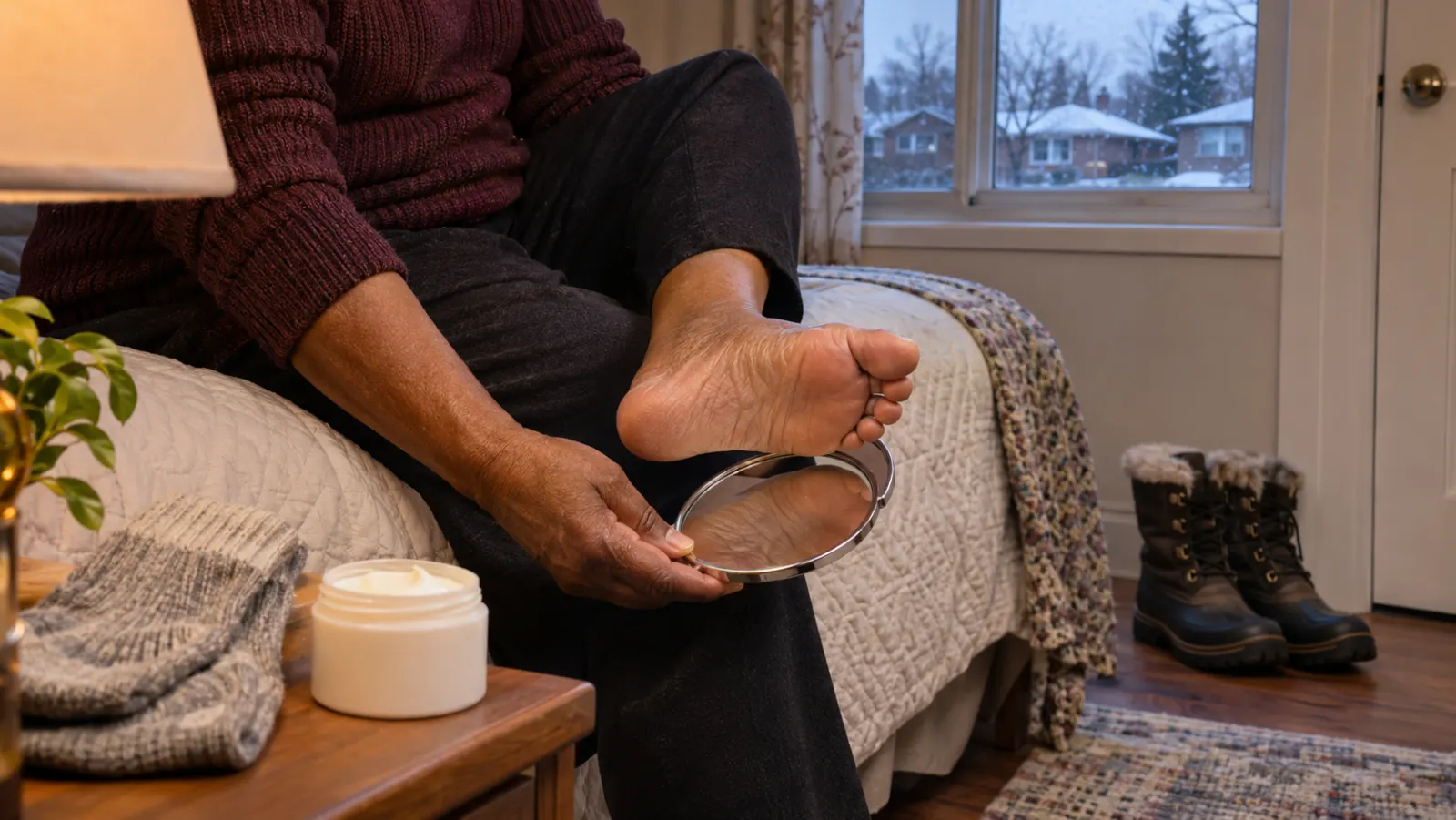
- Sit somewhere with good light. The edge of the bed or a kitchen chair works well.
- Look at the tops, soles, heels and between every toe. If you cannot bend easily, use a hand mirror on the floor or ask a family member to look. Some people take a quick phone photo of the soles.
- Look for changes: cuts, blisters, red or dark spots, swelling, cracks, ingrown nails, calluses with dark spots underneath, or any drainage on your socks.
- Feel for temperature differences. One foot or one area that is noticeably warmer than the other can be a sign of inflammation or infection.
- Wash and dry carefully. Use lukewarm water, test the temperature with your elbow or a thermometer (not your foot), and dry well between the toes.
- Moisturise the skin, but not between the toes. Dry, cracked heels are common in winter; a plain unscented cream helps. Moisture left between the toes can encourage fungal infection.
- Put on clean, dry socks.
If you share a home with an older relative who has diabetes, offering to do this check with them a few times a week can be a meaningful act of care, especially if their eyesight is poor or they find bending hard.
Nail and skin care do’s and don’ts
- Do cut toenails straight across and gently file sharp edges.
- Don’t dig into the corners or cut nails very short.
- Don’t use corn plasters, medicated pads, or “bathroom surgery” with razor blades on calluses. Over-the-counter acid treatments can burn skin you cannot feel.
- Don’t soak feet for long periods; it softens and weakens the skin.
- Do ask for help if your nails are thick, curved or hard to reach. A foot care nurse or chiropodist can help, and your doctor can advise on options or arrange a referral when it is needed.
Footwear when the snow arrives
Scarborough winters are hard on feet. Slush, salt, and long waits at bus shelters on Eglinton or Kennedy Road mean cold, damp feet for hours. For people with neuropathy, winter adds specific risks.
Choosing boots
- Buy boots in the afternoon, when feet are slightly larger, and wear the socks you will actually use.
- Look for a roomy toe box, a firm heel, a cushioned insole and a non-slip sole with good tread.
- Check the inside of new boots with your hand for rough seams, staples or ridges before wearing them.
- Break new boots in gradually, an hour or two at a time, and check your feet afterward.
- If you have custom orthotics, make sure they fit inside your winter boots without crowding the toes.
Socks and warmth
- Choose seamless, moisture-wicking socks; wool blends are good for winter. Avoid tight elastic tops that leave deep marks.
- Change socks if they get wet. Pack a spare pair if you commute or work outdoors.
- Never warm your feet with a heating pad, hot water bottle, space heater or by putting them near the fireplace or the car heater vent. Numb feet cannot sense heat, and serious burns happen this way every winter. Warm socks and a blanket are safer.
- Check for frostbite signs after long periods outdoors: pale, waxy or grey skin, or areas that feel hard.
Inside the house
Many families remove shoes at the door, which is a deeply held custom in a lot of Scarborough homes. If you have neuropathy, wear clean indoor slippers or house shoes with a firm sole rather than going barefoot or in socks alone. This is also important at places of worship, at gatherings with relatives, or anywhere you might walk barefoot on a hard or uneven floor. Shake out every shoe and boot before putting it on.
Wounds that need prompt care
This is the most important section. For someone with diabetes, “wait and see” is not a good approach to a foot wound.
Book a visit within a day or two for
- Any blister, cut, scrape or sore that has not started to improve after a couple of days
- A callus that has a dark spot, blood, or fluid underneath
- An ingrown toenail, especially if the skin is red or swollen
- Cracks in the heel that are deep or bleeding
- A new area of redness or warmth
- A change in the shape of the foot or a new pressure point
Our clinic provides minor wound care and dressing changes, and can help decide whether you need a referral to a wound care or foot specialist. Please call ahead so we can make sure you are seen promptly.
Go to the emergency department for
- A wound with spreading redness, swelling, foul smell, or pus
- A foot that is suddenly hot, red and swollen, even without a wound — this can be a sign of a serious bone and joint problem called Charcot foot, or an infection
- Black or dark blue skin on a toe or part of the foot
- A foot wound with fever, chills, vomiting, confusion, or very high or hard-to-control blood sugar
- A foot that is suddenly cold, pale and painful
Infection can move quickly in diabetes, and some people with neuropathy do not feel pain even when an infection is serious. Trust what you see more than what you feel.
The bigger picture: blood sugar, blood pressure and regular checks
You cannot reverse established nerve damage with foot care alone, but you can slow it and prevent its worst consequences. The same things that protect the rest of the body protect the nerves:
- Keeping blood sugar as close to your agreed target as is safely possible
- Managing blood pressure and cholesterol
- Not smoking; quitting improves circulation to the feet
- Staying active in a way that is safe for your feet, such as walking in well-fitted shoes, swimming, or a stationary bike
- Keeping regular follow-up appointments
People with diabetes should have their feet examined by a clinician regularly, generally at least once a year and more often if there are already signs of nerve damage, poor circulation, or a past ulcer. Your doctor can confirm what is right for you. At your next visit, take your shoes and socks off without waiting to be asked. It is the simplest way to make sure the check actually happens.
If nerve pain is keeping you up at night, mention it. There are medications that can help with painful neuropathy, and your doctor can talk through the options and their side effects.
Caring for diabetic feet in Scarborough
World Diabetes Day is a reminder that diabetes care is mostly made up of small, steady habits rather than dramatic moments. A nightly look at your feet, a good pair of winter boots, and a quick visit when something seems off can genuinely change the long-term story.
HealthSmart Medical supports people in Scarborough with ongoing diabetes management, including foot checks, blood work and medication review. Visit us at 2425 Eglinton Ave. East, Unit 12, call 416-757-7117, or book online. If you notice a hot, swollen foot, blackened skin, or a wound with fever, go to the emergency department right away.
This article is for general information and is not a substitute for medical advice. If you have severe or worsening symptoms, call 911 or go to the nearest emergency department.