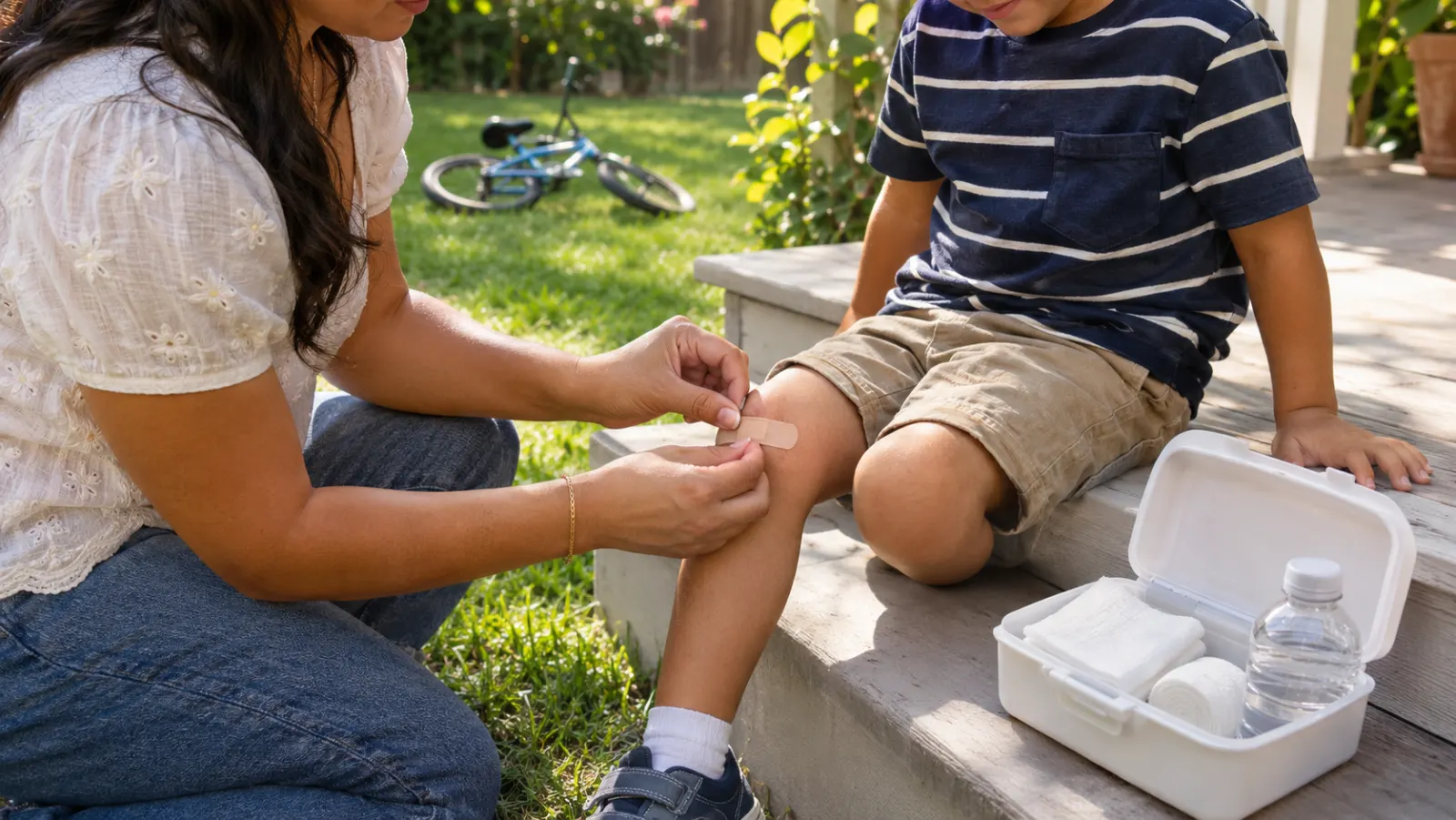
It usually happens at the worst possible moment. You are slicing vegetables for dinner while the kids argue in the next room, and the knife slips. Or your son takes a corner too fast on his bike and comes home with a knee that looks like it lost a fight with the sidewalk. Or you are unpacking boxes in a new apartment and catch your hand on a sharp metal edge.
Most cuts and scrapes are minor. They bleed for a bit, sting for a day, and heal without leaving more than a faint mark. But some wounds need more than a bandage, and the hardest part is often deciding which kind you are looking at, especially when there is blood involved and everyone in the house is offering a different opinion.
This article covers the first-aid basics, how to judge whether a cut might need stitches, why tetanus shots still matter, which signs of infection to watch for, and what happens when it is time to have sutures removed. It is general information to help families in Scarborough make calmer decisions, not a substitute for having a wound looked at when you are unsure.
First things first: stop the bleeding
For almost any cut, the first step is the same: apply firm, steady pressure.
- Wash your hands if you can do so quickly, or put on clean gloves.
- Press directly on the wound with a clean cloth, gauze, or paper towel.
- Hold the pressure without peeking for about 10 minutes. Lifting the cloth to check can restart the bleeding.
- Raise the injured area above the level of the heart if possible, such as holding a cut hand up.
- Add more cloth on top if blood soaks through, rather than removing the first layer.
Most minor cuts stop bleeding with this approach. If blood is spurting, flowing heavily, or will not slow down after 10 to 15 minutes of firm pressure, call 911.
Cleaning the wound properly
Once the bleeding is under control, cleaning is the most important thing you can do to prevent infection.
- Rinse the wound under cool, clean running tap water for several minutes
- Wash the skin around the wound gently with mild soap and water, trying not to get soap deep into the cut
- Remove small bits of dirt with clean tweezers if they come out easily
- Pat the area dry with a clean cloth
You do not need to pour hydrogen peroxide or rubbing alcohol into a wound. These can irritate healthy tissue and may slow healing. Plain water does the job well for most household cuts.
If there is gravel, glass, wood, or other debris that you cannot rinse out, or if you suspect something is still inside the wound, do not dig for it. Have it checked.
Covering and caring for a minor cut
After cleaning, a thin layer of petroleum jelly or an antibiotic ointment, if it suits you and you are not allergic, can help keep the wound moist and reduce scabbing. Cover it with an adhesive bandage or sterile dressing.
Change the bandage daily, or sooner if it gets wet or dirty. Each time, take a look at how things are healing. A healthy small cut usually looks a little pink at the edges and gradually closes over several days.
For larger scrapes or wounds that need regular attention, professional dressing changes can help keep things clean and allow a clinician to keep an eye on healing.
Does it need stitches?
This is the question that sends most people searching online. Stitches, also called sutures, close a wound so it heals faster, with less risk of infection and a neater scar. Some wounds are closed with skin glue or adhesive strips instead, depending on the location and depth.
Signs a cut may need closing
Get a cut assessed promptly if:
- The edges gape open and do not come together easily on their own
- It is deeper than a shallow scratch, especially if you can see yellow fatty tissue, muscle, or anything that looks like bone
- It is longer than about a centimetre or two and in a spot that moves a lot, such as over a knuckle, knee, or elbow
- It is on the face, lip, or eyelid, where the appearance of the scar matters
- It keeps bleeding despite steady pressure
- It was caused by something dirty or rusty, or has debris stuck in it
Timing matters
Wounds that need closing are generally best repaired within hours of the injury, not days. The longer a cut stays open, the higher the risk of infection, and after a certain point a clinician may decide it is safer to let it heal on its own. If you think stitches might be needed, do not wait until tomorrow to see if it gets better on its own.
For a cut that may need stitches, call ahead to the clinic you plan to visit to confirm they can repair it, or go to an urgent care centre or emergency department. At HealthSmart Medical, we can assess minor wounds, review tetanus status, check for infection, change dressings, and remove sutures, and we will tell you honestly if a wound needs a different level of care.
Wounds that need emergency care
Some injuries should go straight to the emergency department, or warrant a 911 call:
- Heavy bleeding that will not stop with pressure
- Blood spurting from the wound
- A deep wound to the chest, abdomen, neck, or head
- Numbness, tingling, or weakness past the cut, such as a finger that will not bend or feels numb
- A wound with an object stuck in it (leave the object in place)
- Cuts from a crush injury or machinery
- Animal or human bites, particularly on the hand or face
- Deep puncture wounds, such as stepping on a nail
- A large cut in someone who takes blood thinners
- Signs of shock, such as pale clammy skin, confusion, or fainting
Bites deserve a special mention. Even small dog or cat bites can become infected quickly, and some bites raise questions about rabies. These should be assessed on the same day.
Tetanus: the shot people forget
Tetanus is a rare but serious infection caused by bacteria found in soil, dust, and animal waste. It can enter the body through a cut or puncture wound. The good news is that it is preventable with vaccination.
Most adults received tetanus shots as children, but protection fades over time, so boosters are recommended periodically through adulthood. If you are not sure when you had your last tetanus shot, you are not alone. Many people have no idea.
After a wound, a clinician will often ask about tetanus. You may need a booster if:
- You have not had one in many years or do not remember your last one
- The wound is dirty, deep, or a puncture
- You never completed the childhood vaccine series
A booster is often given as part of a combined vaccine that also protects against diphtheria and whooping cough. Your clinician can confirm the right timing for you. Tetanus is also a good reason to keep your adult vaccinations up to date in general, not just after an injury.
For newcomers to Canada, childhood vaccine records from your home country can help a clinician decide whether you need a booster or a catch-up series.
Watching for infection
Even with good care, a wound can become infected. Infection usually shows up a day or more after the injury rather than immediately.
Early signs
- Redness spreading out from the wound
- Increasing swelling or warmth
- Pain that gets worse after the first day or two instead of better
- Pus or cloudy drainage
- An unpleasant smell
Signs that need urgent attention
- Red streaks running up the arm or leg from the wound
- Fever or chills
- Feeling generally unwell
- Rapidly spreading redness or swelling
- Severe pain out of proportion to how the wound looks
If you notice early signs of infection, book a visit so the wound can be checked. If there are red streaks, fever, or the redness is spreading fast, seek care the same day or go to the emergency department.
People with diabetes, poor circulation, or weakened immune systems should be especially careful. Even small wounds on the feet can become a problem, and should be checked early. If you or an older relative in your home has diabetes, it is worth looking at feet regularly for small cuts that may not be felt.
Caring for stitches at home
If your wound was stitched or glued, you will usually receive specific instructions. Common advice includes:
- Keep the area clean and dry for the first day or two, or as directed
- After that, gentle washing is usually fine, but avoid soaking in a bath, pool, or hot tub until the stitches are out
- Pat dry rather than rubbing
- Do not pick at stitches, scabs, or glue
- Avoid activities that stretch the area or risk reopening it
- Watch for the infection signs listed above
If the wound opens up, bleeds again, or a stitch comes loose early, contact a clinic for advice.
Suture removal: when and where
Not all stitches need removing. Some dissolve on their own. If yours do need to come out, your clinician will tell you roughly when. Timing varies by location on the body: stitches on the face usually come out sooner than those on the back, hands, or over a joint, where skin is under more tension.
Removing stitches too early can let the wound pull apart. Leaving them too long can increase scarring and irritation. That is why it is best to follow the timeline you were given rather than guessing.
You do not have to go back to the hospital where you were stitched. Many people who got sutures at an emergency department or urgent care centre prefer to have them taken out closer to home. HealthSmart Medical offers suture removal in Scarborough. The procedure is quick and usually only causes a mild tugging feeling. Bring any discharge paperwork you received so the clinician knows what was done.
Helping the scar heal well
Once the wound has closed fully, a few habits help the scar settle:
- Protect it from the sun with clothing or sunscreen, since new scars can darken with sun exposure
- Gently massaging the closed scar once healed may help it soften over time
- Be patient: scars often take months to fade and flatten
If a scar becomes thick, raised, itchy, or keeps growing beyond the wound’s edges, mention it to a doctor. Some people are more prone to raised scars, and there are options to discuss.
Need a wound checked?
A cut does not have to be dramatic to deserve a second opinion. If you are unsure whether a wound is healing well, need a tetanus booster, or have stitches that are due to come out, the team at HealthSmart Medical can help.
You will find our clinic in Scarborough at 2425 Eglinton Ave. East, easy to reach by car or transit. Call 416-757-7117 or book online, and bring any paperwork from previous care with you.
This article is for general information and is not a substitute for medical advice. If you have severe or worsening symptoms, call 911 or go to the nearest emergency department.