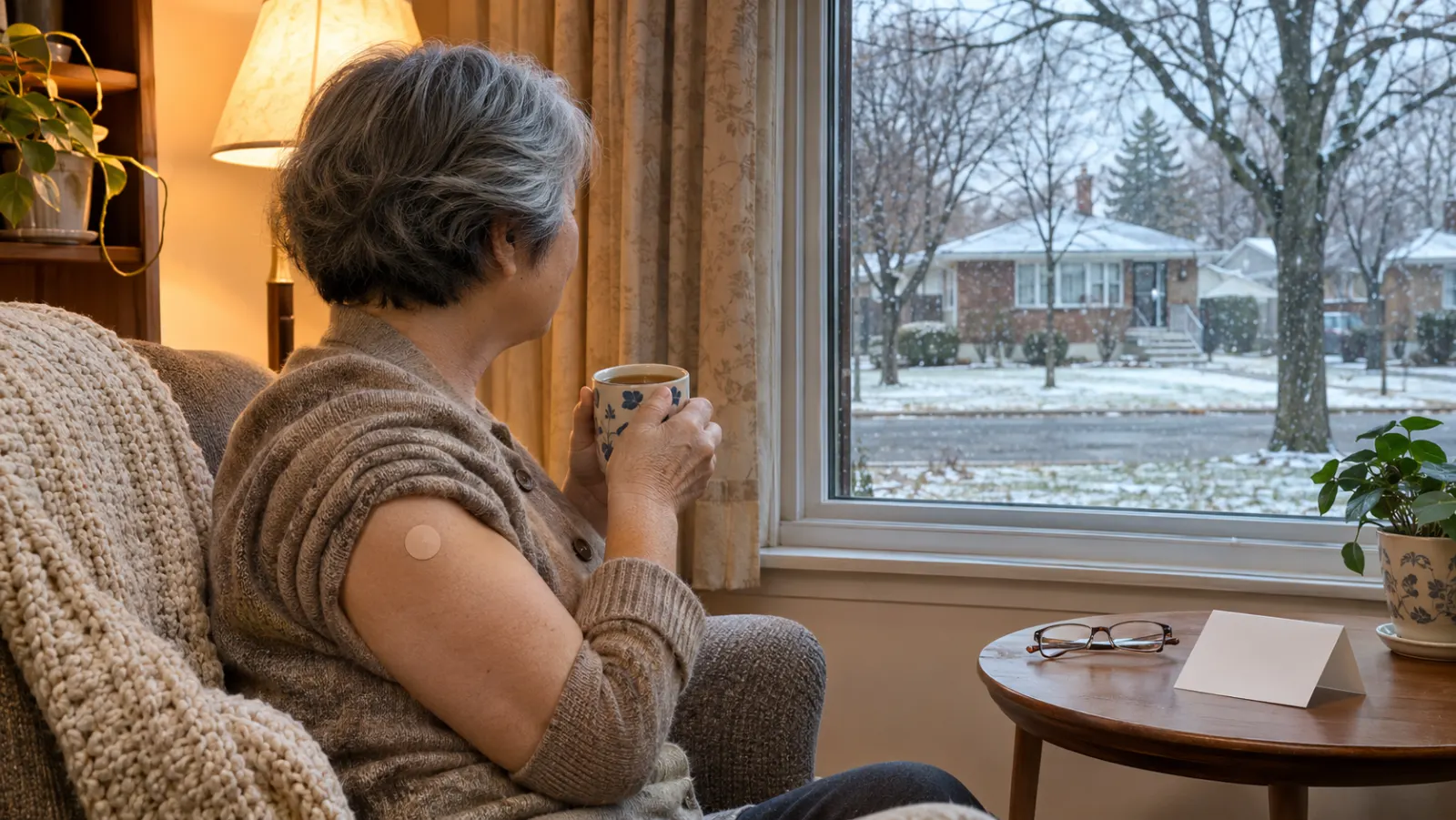
A few years ago, COVID-19 vaccines were front-page news every day. Now the questions are quieter but still very real. Do I need another one? Is it the same as last year’s? Can I get it with my flu shot? My mother is 78 and my teenager has asthma, so who in the house actually needs it? Those are the questions we hear at the front desk as the furnace comes on and the first snow flurries drift across Eglinton.
COVID-19 has not disappeared. It has settled into a pattern of waves, with more cases often appearing in the colder months when people spend more time indoors together. For most healthy younger people it now causes an illness similar to a bad cold or flu. For older adults, people with weakened immune systems and those with certain chronic conditions, it can still lead to hospitalization or serious complications.
This guide focuses on the updated COVID-19 vaccine: who is generally advised to consider it, how timing works, what side effects to expect, and how to think about the decision for your household. It is general information. Recommendations and eligibility for publicly funded doses can change from season to season, so confirm the current advice with your clinician, pharmacist or Toronto Public Health.
Why there is an updated vaccine at all
The virus that causes COVID-19 keeps changing. New variants appear, and the protection your body built from earlier vaccines or infections fades over time, especially protection against infection. Protection against severe illness tends to last longer, but it also wanes, particularly in older people.
To keep up, vaccine makers update the formula to better match the variants circulating. Public health experts in Canada review the evidence and issue recommendations for each respiratory virus season. Think of it as a refresh rather than a brand-new vaccine: the same basic approach, updated to target more recent strains.
Who is usually advised to get a dose
Public health guidance in Canada has generally focused updated COVID-19 vaccines on the people most likely to become seriously ill. Exact eligibility for free doses in Ontario has shifted over time, but the groups most often prioritized include:
- Older adults, with risk climbing steadily with age
- Residents of long-term care homes and other congregate living settings
- People with moderately to severely weakened immune systems, for example from cancer treatment, organ transplant or certain medications
- People who are pregnant, since pregnancy raises the risk of severe COVID-19 and vaccination can pass some protection to the newborn
- People with underlying medical conditions that raise their risk, such as significant heart or lung disease, diabetes or kidney disease
- Some communities that have faced higher rates of severe illness, and people who face barriers to accessing care
- Health care workers and caregivers in close contact with high-risk people
Healthy children, teens and younger adults may still be able to receive a dose, and some may benefit, but recommendations for these groups have been less strong in recent seasons. If you are unsure where you or a family member fits, a short conversation with a clinician or pharmacist is the easiest way to sort it out. Bring a list of any medical conditions and medications.
Multigenerational households
Many Scarborough homes have grandparents, working parents and school-aged children all under one roof. The child who brings home a virus from class may shrug it off, while the grandparent who catches it may not. Vaccinating the people at highest risk is the main goal, but thinking about the household as a whole, including good hand hygiene, staying home when sick and ventilation, helps protect everyone.
Timing: when to get it
In relation to the season
Updated vaccines usually become available in the fall. Getting your dose before winter gatherings and the holiday season helps ensure protection is strong during the busiest months for respiratory viruses. That said, late November or December is not too late if you have not had one yet.
In relation to your last dose
If you had a COVID-19 vaccine fairly recently, there is usually a recommended minimum gap before the next dose. Your clinician or pharmacist can check your record and tell you when you are due.
If you recently had COVID-19
Having had COVID-19 gives some short-term protection. For that reason, people who have recently recovered are often advised to wait a few months before their next dose, though the right timing depends on your risk level. People at high risk may be advised differently. Ask before you book.
If you are sick right now
If you have a fever or are feeling quite unwell, wait until you have recovered before getting vaccinated. Mild cold symptoms alone are usually not a reason to delay, but it is polite to mention them when you arrive.
Getting it at the same visit as a flu shot
Yes, in general, COVID-19 vaccines can be given at the same visit as the flu vaccine, usually one in each arm. Many people find this convenient: one trip, one set of sore arms, done for the season. There is no need to space them out unless your clinician has a specific reason.
Some people prefer to separate them by a few days so that if they feel tired or achy afterward, they know which vaccine caused it. That is a reasonable personal choice too, as long as it does not lead to one of them being skipped. We have a separate page on flu shots if you want details on that vaccine.
Other vaccines that older adults or pregnant people may be offered around this time of year, such as RSV vaccines, can also sometimes be given at the same visit, though your clinician may recommend a particular order. Ask what makes sense for you.
What to expect after your dose
Most side effects are mild and short-lived, usually settling within a day or two:
- A sore, red or swollen arm where the needle went in
- Tiredness
- Headache
- Muscle aches or chills
- Low-grade fever
- Swollen lymph nodes in the armpit on the side of the injection
These are signs that the immune system is responding. Rest, fluids, and acetaminophen or ibuprofen if you need them, can help. Moving the arm gently through the day often eases stiffness. If you have a mammogram booked soon, mention your recent vaccine to the imaging team, because temporary swelling of lymph nodes can show up on the images.
Rare but important reactions
Serious reactions are rare.
- Allergic reactions. Severe allergic reactions usually happen within minutes, which is why you are asked to wait for a short period after any vaccine. If you develop swelling of the face, lips or tongue, trouble breathing, or hives across the body after leaving, call 911.
- Heart inflammation. Myocarditis and pericarditis have been reported rarely after mRNA COVID-19 vaccines, most often in adolescent and young adult males and usually within a week after a dose. Most cases have been mild and recovered well. If you or your teen develop chest pain, shortness of breath, or a racing, fluttering or pounding heartbeat in the days after vaccination, seek medical care promptly. If symptoms are severe, call 911.
If you have had a reaction to a previous COVID-19 vaccine, tell the clinician before your next dose. In many cases another dose is still possible, sometimes with a different product or extra precautions.
COVID, flu or a cold?
A quick word on telling these apart, since people often ask. Honestly, it is hard to tell from symptoms alone. All three can cause a sore throat, runny nose, cough, tiredness and fever. Flu often hits suddenly with high fever and body aches. Colds tend to be milder and build slowly. COVID-19 can look like either, and a change in taste or smell, while less common than in earlier waves, still points toward COVID-19.
The practical point is that testing matters most for people who might benefit from early treatment. Antiviral treatment for COVID-19 may be offered to people at higher risk of severe illness, but it works best when started within the first few days of symptoms. If you are older, immunocompromised or have significant chronic conditions, keep some rapid tests at home if you can and contact a clinician or pharmacist early if you test positive. Our respiratory infection treatment page covers how we assess coughs and chest symptoms.
Emergency signs during any respiratory illness
Call 911 or go to the nearest emergency department for:
- Severe trouble breathing or shortness of breath at rest
- Chest pain or pressure
- New confusion, or being very hard to wake
- Bluish or grey lips or face
- Signs of dehydration, such as very little urine
- In babies and young children, fast or laboured breathing, poor feeding, or unusual drowsiness
Common questions
“I’m healthy and had COVID last year. Do I need a shot?”
Possibly not, depending on your age and health. Healthy younger adults are generally at low risk of severe illness, and current recommendations for them are less strong. If you live with or care for someone at high risk, or simply want the extra protection, talk it over with a clinician or pharmacist.
“Can I get it if I’m pregnant or breastfeeding?”
Yes. COVID-19 vaccination is generally recommended during pregnancy and is considered safe while breastfeeding. Discuss timing with your prenatal care provider.
“What if I have lost my vaccine records?”
Ontario residents can usually look up their COVID-19 vaccination history through the provincial online system, and your pharmacy or clinic may also have records. Bring whatever you have to your appointment.
COVID-19 vaccines in Scarborough at HealthSmart Medical
The best decision about an updated COVID-19 vaccine is a personal one, made with current information and your own health in mind. For many older adults and people with chronic conditions in Scarborough, it remains one of the simplest ways to reduce the risk of a serious winter illness.
HealthSmart Medical offers COVID-19 vaccinations alongside other adult vaccinations at 2425 Eglinton Ave. East, Unit 12, in Scarborough. Vaccine supply and eligibility can change through the season, so please call 416-757-7117 before you come in, or book online. Bring your health card and any vaccine records, and if you are due for a flu shot as well, we can talk about getting both at once.
This article is for general information and is not a substitute for medical advice. If you have severe or worsening symptoms, call 911 or go to the nearest emergency department.