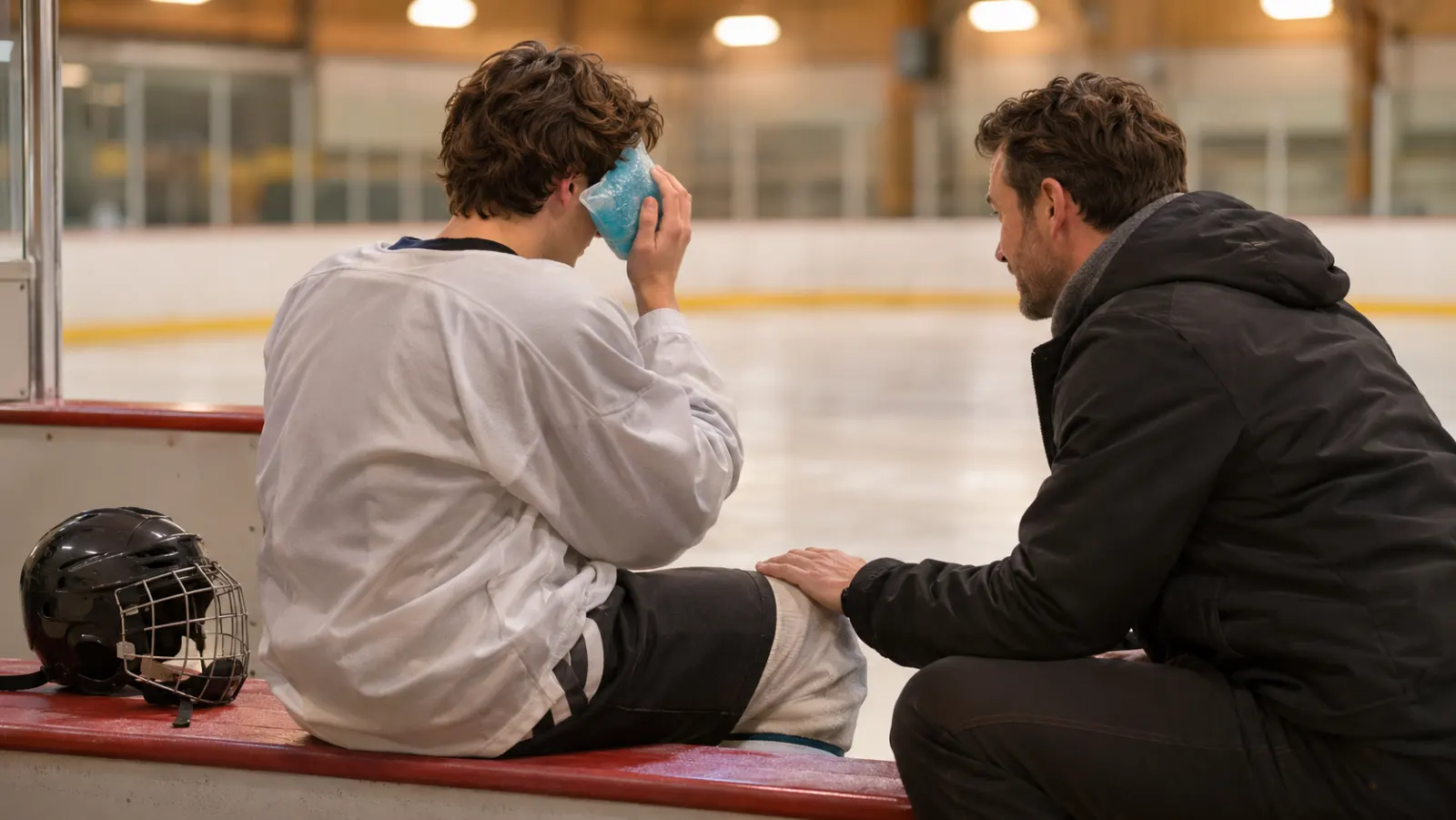
A concussion rarely looks like much from the outside. There is no cast, no stitches, often not even a bruise. A teenager takes a hit along the boards at a Saturday morning game, shakes it off and finishes the shift. A grandmother slips on black ice outside a plaza, bumps the back of her head, and insists she is fine. An office worker clips their head on a car door frame while scraping a frozen windshield. Hours later, or the next day, the headache arrives, along with a strange fog that makes reading a text message feel like hard work.
Winter brings more of these injuries. Ice on driveways and bus stops, crowded outdoor rinks, toboggan hills, hockey and basketball seasons in full swing: in Scarborough, December through March is when a lot of bumped heads happen. Most concussions heal well with sensible care. But they are genuine brain injuries, and how they are handled in the first days and weeks makes a real difference to how quickly a person recovers.
This article covers what a concussion is, the symptoms to watch for in children and adults, the danger signs that mean going straight to an emergency department, and how a gradual return to school, work and sport usually works. It is general information and does not replace an assessment by a clinician who can examine the person who was injured.
What a concussion actually is
The brain sits inside the skull cushioned by fluid. A sudden blow to the head, or even a hard jolt to the body that whips the head back and forth, can make the brain move and twist within the skull. That movement disrupts how brain cells work for a period of time. The result is a concussion, sometimes called a mild traumatic brain injury.
A few points surprise many people:
- You do not have to be knocked out. Most concussions happen without any loss of consciousness.
- You do not have to hit your head. A whiplash-type jolt, like a heavy body check or a hard fall onto the back, can be enough.
- Scans are usually normal. A CT or MRI looks for bleeding or structural damage, which is uncommon in a concussion. A normal scan does not rule out a concussion; the diagnosis is based on the injury, the symptoms and the examination.
- Symptoms can be delayed. They may not appear for hours, sometimes until the next day, especially once the adrenaline of a game or the shock of a fall wears off.
Recognising the signs
Concussion symptoms vary a lot from person to person. They tend to fall into a few groups.
Physical
- Headache or a feeling of pressure in the head
- Dizziness or balance problems
- Nausea or vomiting
- Blurred vision
- Sensitivity to light or noise
- Feeling tired or low on energy
Thinking and memory
- Feeling foggy, slowed down or “not right”
- Trouble concentrating or remembering
- Confusion about recent events
- Repeating the same questions
Mood and sleep
- Irritability, sadness or nervousness
- Being more emotional than usual
- Sleeping more or less than usual, or having trouble falling asleep
In young children
Toddlers and preschoolers cannot tell you their head feels foggy. Watch instead for unusual crankiness, crying that is hard to settle, loss of interest in favourite toys, changes in eating or sleeping, clumsiness, or losing a recently learned skill such as toilet training.
What others might notice
Sometimes the person who is injured is the last to recognise it. Teammates, coaches, parents and co-workers may see someone lying still after a fall, slow to get up, clutching their head, looking blank or dazed, stumbling, or answering questions slowly.
If a concussion is suspected during a game or practice, the player should be removed from play right away and should not go back in that day, even if they say they feel fine. Ontario’s Rowan’s Law sets out concussion awareness and removal-from-sport requirements for organised youth and amateur sport, but the same common sense applies to adult rec leagues, pickup hockey and backyard rinks.
Danger signs: when to go to the emergency department
Most concussions do not need an emergency visit. But a head injury can occasionally involve bleeding inside the skull or a neck injury, and these are emergencies. Call 911 or go to the nearest emergency department right away if, after a head injury, the person:
- Lost consciousness, even briefly
- Has a headache that is severe or getting worse
- Vomits repeatedly
- Has a seizure
- Becomes more confused, drowsy, or difficult to wake
- Has slurred speech, or cannot recognise people or places
- Has weakness, numbness or tingling in the arms or legs
- Has double vision or pupils of different sizes
- Has neck pain or tenderness, especially after a fall or a hit
- Becomes increasingly restless, agitated or combative
- Has clear fluid or blood coming from the nose or ears
- Is a baby who will not stop crying, will not feed, or has a swollen soft spot on the head
If a neck injury is possible, do not move the person; call 911 and keep them still.
Older adults and blood thinners
Older adults deserve particular caution. A fall on ice that seems minor can cause slow bleeding around the brain, and the symptoms of that bleeding may not appear until hours or even days later. The risk is higher in people who take blood thinners such as warfarin, apixaban or rivaroxaban, or antiplatelet medicines.
If an older family member hits their head, especially if they take one of these medications, it is wise to have them assessed promptly, usually in an emergency department where a CT scan is available if needed. In the days and weeks afterwards, watch for a new or worsening headache, increasing confusion, unusual sleepiness, a change in personality, or new weakness or unsteadiness. These need urgent medical attention. In multigenerational Scarborough households, it helps if everyone at home knows these signs.
The first 24 to 48 hours
Once serious injury has been ruled out, the early approach is generally:
- Relative rest. Take it easy for the first day or two. That does not mean lying in a dark room for a week, which is old advice that can actually slow recovery. It means cutting back on activities that clearly make symptoms worse.
- Limit screens early on. Phones, video games and computers can make headaches and fogginess worse in the first couple of days.
- Someone should stay nearby. For the first night, it is sensible for another adult to be around and to check on the injured person. Routinely waking someone every hour is not usually necessary unless a clinician has advised it, but if they are very hard to wake, call 911.
- Avoid alcohol and recreational drugs, which can mask worsening symptoms and slow healing.
- Do not drive until thinking and reaction time feel normal. A concussion can affect judgment and reflexes even when you feel mostly fine.
- For headache, ask a clinician or pharmacist which pain reliever is appropriate. Acetaminophen is often suggested early on; some people are advised to avoid anti-inflammatory medications in the first day or two.
A gradual return, one step at a time
After the first day or two of rest, the goal is to slowly reintroduce normal activity. Current guidance encourages light physical activity, such as a short walk, fairly early, as long as it does not make symptoms significantly worse. Gentle activity seems to help the brain recover.
A useful rule of thumb: a small, brief increase in symptoms with an activity is acceptable, but if symptoms jump noticeably or linger afterwards, scale back and try again the next day.
Returning to school
Most students can return to school before they are fully symptom-free, with adjustments. School usually comes before sport. A step-by-step return might look like:
- Light activities at home, such as reading or a short amount of screen time, as tolerated
- Schoolwork at home in short sessions
- Partial days at school, with breaks and a quiet place to rest
- Full days with accommodations such as extra time, fewer tests, reduced homework, or rest from gym and music class
- Full days without accommodations
Let the school know about the concussion so teachers can adjust expectations. Ontario schools have their own concussion procedures, and they may ask for documentation from a doctor.
Returning to sport
Return to sport also follows a staged plan, and the steps are usually separated by at least 24 hours:
- Daily activities that do not provoke symptoms
- Light aerobic exercise, such as walking or a stationary bike
- Sport-specific exercise, such as skating drills, with no contact
- More demanding non-contact training drills
- Full-contact practice, only after medical clearance
- Return to games
If symptoms return at any step, drop back to the previous one. Full-contact practice and games should wait until the athlete is back at school without problems and has been cleared by a physician or nurse practitioner. Returning to contact too early raises the risk of another concussion, which may take longer to heal.
Returning to work
Adults often feel pressure to get back to work quickly. Many people can return to work within days, especially if the job allows some flexibility. A gradual return, such as shorter hours, more breaks, a quieter workspace, or fewer screen-heavy tasks at first, often works better than a sudden full load. Jobs that involve driving, heights, operating machinery or safety-sensitive decisions may need more time and a more careful plan.
If you need time off or a modified return, our clinic can help with sick notes and return-to-work assessments. For injuries that happened on the job, ask about the WSIB process at your visit.
When recovery takes longer
Most people with a concussion feel much better within days to a few weeks. Children and teenagers may take longer than adults. For some, symptoms linger for weeks or months. Headaches, dizziness, trouble concentrating, poor sleep, low mood and anxiety are the most common lingering problems.
If symptoms are not clearly improving after a few weeks, or they are getting in the way of school, work or family life, it is worth a follow-up appointment. A clinician can review how recovery is going, address sleep, headaches and mood, and, when appropriate, arrange specialist referrals, for example to a concussion clinic, physiotherapy for neck and balance problems, or other supports. Persistent symptoms are real and treatable, and nobody should feel they have to push through them alone.
A history of more than one concussion is also worth discussing, particularly for young athletes deciding whether to continue in contact sports.
Reducing the risk this winter
You cannot prevent every concussion, but you can stack the odds in your favour:
- Helmets on the ice and the hill. A properly fitted hockey helmet for hockey, and a ski or hockey helmet for tobogganing, skiing and snowboarding. Young children learning to skate at a public rink benefit from a helmet too.
- Fair play and good coaching. Body-checking rules exist for a reason, and teaching players to keep their heads up protects everyone.
- Footwear with grip. Insulated boots with good treads, and ice cleats for icy walks to the bus stop.
- Clear and salt walkways at home, especially where older relatives walk.
- Light the way. Many falls happen in the dark winter evenings, on steps and walkways with poor lighting.
- Booster seats and seatbelts in the car, since winter collisions are another common cause.
Head injuries and next steps in Scarborough
Concussion in Scarborough is mostly a winter story: icy steps, packed rinks and busy sports schedules. Take any head injury seriously, know the danger signs that need the emergency department, start with a short period of rest, and then return to school, work and sport gradually rather than all at once.
If you or your child has had a bump to the head and you are not sure what to do next, or recovery is taking longer than expected, we can help. HealthSmart Medical is at 2425 Eglinton Ave. East, Unit 12, in Scarborough. Visit as a walk-in patient, call 416-757-7117, or book online. For a head injury with any danger signs, always go to the emergency department or call 911 instead.
This article is for general information and is not a substitute for medical advice. If you have severe or worsening symptoms, call 911 or go to the nearest emergency department.