You know the feeling if you have had one. A faint tingle or itch at the edge of the lip, usually in the same spot as last time, often the morning of something important: a family photo, a job interview, the first day back after the holidays. By the next day there is a small cluster of blisters, then a weepy patch, then a crust that takes its time to heal. It is not dangerous for most people, but it is uncomfortable, it is visible, and it tends to arrive at the worst moments.
Cold sores are caused by a very common virus, and a large share of adults carry it whether or not they have ever had a noticeable sore. Winter is often a busy season for them. Cold, dry wind chaps the lips, a bad cold or flu can bring one on, the end-of-year rush adds stress, and bright sun bouncing off snow is surprisingly strong. Many people in Scarborough notice their cold sores flare between December and March.
This guide explains what triggers cold sores, how they spread, why it is so important to keep them away from newborns and people with eczema, what treatments can help, and the one complication that always needs urgent attention: a cold sore that involves the eye. It is general information, not a diagnosis.
What causes cold sores
Cold sores are caused by the herpes simplex virus, most often type 1 (HSV-1). The word “herpes” makes some people uncomfortable, but this is the same virus that most people pick up in childhood from a kiss from a relative, a shared spoon or a cup. It has nothing to do with hygiene or character.
After the first infection, the virus does not leave the body. It travels along a nerve and settles quietly in a cluster of nerve cells near the face. Most of the time it stays dormant. Every so often, something wakes it up, and it travels back along the nerve to the skin, usually at the same spot on the lip, and causes a new sore.
The first infection can look very different
When young children catch the virus for the first time, they sometimes do not get a typical lip blister at all. Instead, some develop a more widespread infection of the mouth, with fever, swollen gums, many painful sores on the gums, tongue and inside of the cheeks, drooling and irritability. Eating and drinking can hurt so much that children refuse fluids. If your child has painful mouth sores and is not drinking well, is passing much less urine than usual, or seems very unwell, get them seen the same day. Dehydration is the main concern.
Cold sores versus canker sores
People often mix these up. Cold sores usually appear on the outside of the lips or the skin around the mouth, start as blisters, and are contagious. Canker sores appear inside the mouth, on the inner cheeks, inner lips or tongue, look like small, shallow white or yellowish ulcers with a red edge, and are not contagious.
Stages of a cold sore
Recurrent cold sores usually follow a predictable pattern:
- Warning stage. Tingling, itching, burning or tightness at the edge of the lip, sometimes a day or so before anything is visible. This is the best time to start treatment.
- Blister stage. A small cluster of fluid-filled blisters appears, often on a red, swollen base.
- Weeping stage. The blisters break and leave a shallow, raw, sometimes painful sore. This is when it is most contagious.
- Crusting stage. A yellowish or brown crust forms. It may crack and bleed when you smile or eat.
- Healing. The crust falls off and the skin heals, usually without a scar, typically within one to two weeks.
Common triggers, especially in winter
Not everyone has the same triggers, and some people never figure out what sets theirs off. Common ones include:
- Cold and wind. Standing at a bus stop on Eglinton with a cold wind blowing in your face, or a long walk home from the GO station, can chap the lips and stir up the virus.
- Sun and snow glare. Ultraviolet light is a well-known trigger. Fresh snow reflects sunlight, so a bright winter day outdoors, a skating afternoon or a ski trip can bring one on.
- Colds, flu and fever. Cold sores are sometimes called fever blisters for good reason. The virus often reactivates while your body is fighting off another illness.
- Stress and fatigue. Exams, deadlines, family obligations and late nights during the holidays can all play a part.
- Hormonal changes, such as around a menstrual period.
- Injury to the lips, including dental work, cracked lips, or cosmetic treatments around the mouth.
- A weakened immune system, from illness or certain medications.
Prevention that makes sense in winter
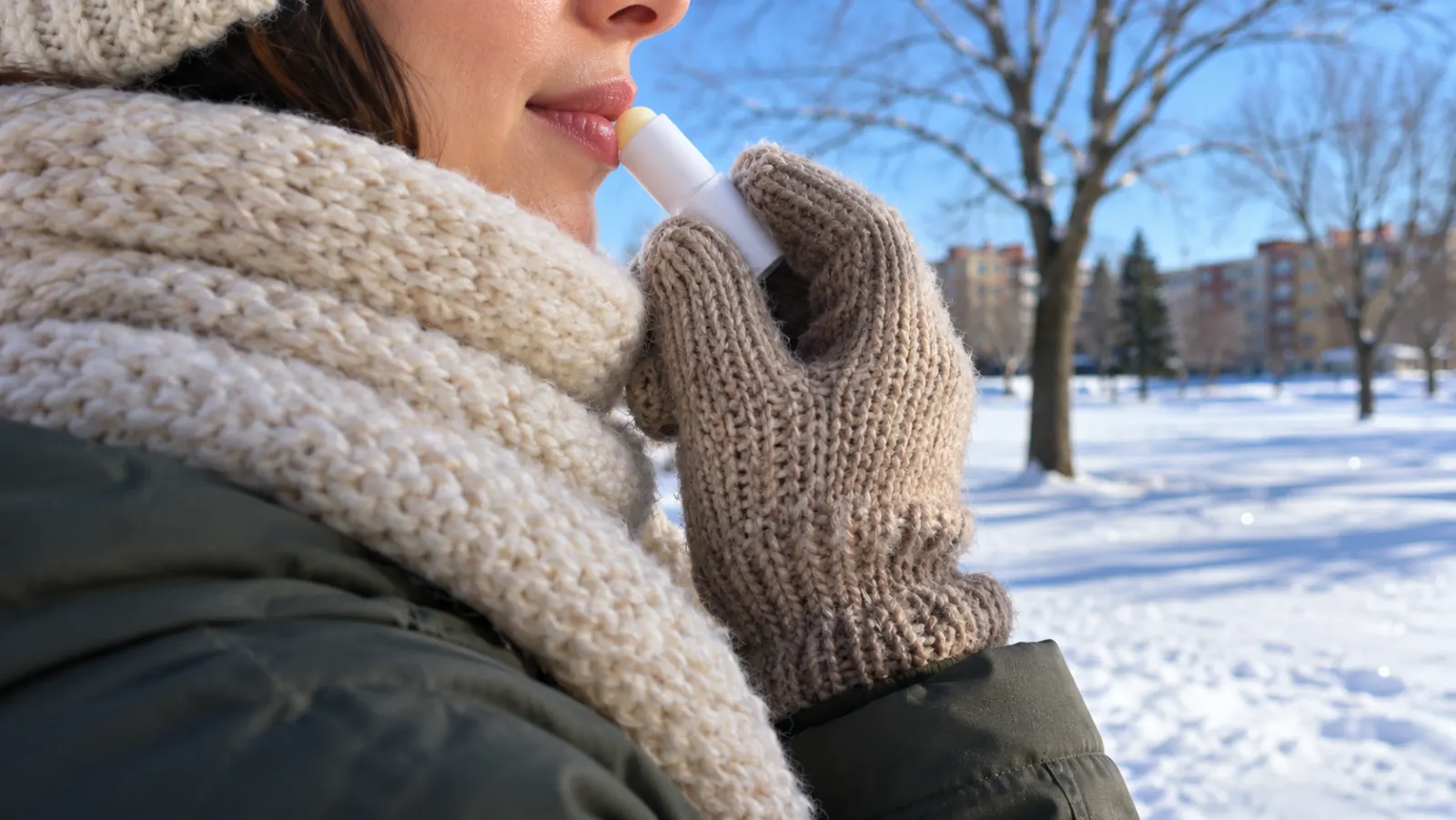
- Protect your lips. Use a lip balm with sunscreen (SPF 30 or higher is a good target) before you head outside, and reapply often, especially on bright, snowy days.
- Cover up. A scarf or neck warmer over the lower face on windy days helps protect lips from chapping.
- Keep lips moisturized indoors as well, since heated air is very drying.
- Look after the basics. Sleep, regular meals and some downtime will not prevent every outbreak, but exhaustion and stress make them more likely.
- Plan ahead. If you get frequent cold sores and have something important coming up, such as dental work or a holiday in the sun, ask your doctor whether a preventive plan makes sense.
How cold sores spread
The virus spreads through direct contact with the sore or with saliva. It is most contagious from the first tingle until the sore has completely healed, with the weeping blister stage being the highest risk. The virus can also be shed occasionally when there is no visible sore at all, which is part of why it is so widespread.
While you have a cold sore:
- Avoid kissing, including quick kisses on the cheek for children and older relatives.
- Do not share cups, water bottles, utensils, straws, lip balm, lipstick, towels, razors or face cloths.
- Keep your hands off it. Try not to touch, pick or squeeze the sore. If you do touch it, or after applying cream, wash your hands with soap and water.
- Be careful with your eyes. Avoid rubbing your eyes, and wash your hands before handling contact lenses.
- Avoid oral sex until it has healed. HSV-1 from a cold sore can be passed to the genitals.
At home, everyday cleaning of dishes and laundry is enough. You do not need to boil everything.
Babies, eczema and vulnerable family members
This is where cold sores move from nuisance to genuine concern.
Newborns
In very young babies, especially in the first several weeks of life, the herpes simplex virus can cause a serious, sometimes life-threatening infection. Their immune systems are not ready to contain it the way an older child’s or adult’s can.
In many Scarborough families, a new baby is passed from grandparent to auntie to cousin during visits, and kissing a baby’s face and hands is a natural way to show love. If anyone in the family has a cold sore, or feels that tingling warning, they should not kiss the baby at all, should wash their hands carefully before touching the baby, and may want to hold off on close contact until the sore has healed. It is perfectly fine for parents to ask visitors about this. A kind, clear rule protects everyone.
If a baby under three months old develops blisters on the skin or in the mouth, a fever, poor feeding, unusual sleepiness, or seems unwell after contact with someone who had a cold sore, seek medical care urgently. Go to the emergency department for a young baby who is feverish, floppy or not feeding.
People with eczema
The cold sore virus can occasionally spread widely across skin affected by eczema, causing clusters of painful blisters or punched-out sores and making the person feel unwell. This is a medical emergency known as eczema herpeticum and needs same-day care. Keep anyone with an active cold sore from close contact with children or adults who have eczema.
People with weakened immune systems
People receiving chemotherapy, taking medications that suppress the immune system, or living with certain medical conditions may get larger, longer-lasting or more widespread cold sores. They should contact their doctor early in an outbreak.
Treatment options
Most cold sores heal on their own within one to two weeks. Treatment can ease discomfort and, when started early, may shorten an outbreak.
Home care
- Cool compresses can soothe burning and reduce redness.
- Pain relievers such as acetaminophen or ibuprofen can help, if they are safe for you.
- Keep the area moist with a plain lip ointment once it starts to crust, to reduce cracking and bleeding. Apply it with a clean cotton swab rather than straight from the tube, so you do not contaminate the product.
- Avoid irritating foods like very salty, spicy or acidic dishes while it is raw.
- Let the crust come off on its own. Picking slows healing and can lead to infection or scarring.
Pharmacy products
Some non-prescription creams are designed to be applied at the first tingle and may shorten an outbreak slightly. Pharmacists in Ontario can also assess and prescribe treatment for cold sores in many cases, which can be a convenient first stop. They will refer you to a doctor if anything about the sore or your health history needs more attention.
Prescription antiviral treatment
Prescription antiviral medications, usually taken as pills, can help a cold sore heal faster, especially when started at the warning stage or within the first day. Some people with predictable outbreaks keep a prescription on hand so they can start treatment as soon as they feel the tingle. People with very frequent or severe outbreaks may be offered a daily preventive medication for a period of time. Your clinician will consider your age, kidney function, other medications and how often you get cold sores when deciding what is appropriate.
Antiviral treatment does not cure the infection or remove the virus from the body. It helps control outbreaks.
Warning signs: get help promptly
Eye involvement is urgent
The herpes simplex virus can infect the eye, causing a condition that can damage the surface of the eye and, if not treated properly, affect vision. Seek same-day medical care, at an emergency department if necessary, if you or your child has a cold sore, or recently had one, and develops:
- A red, painful or gritty-feeling eye
- Sensitivity to light
- Blurred vision
- Watering or discharge from the eye
- Blisters on the eyelid or near the eye
Do not use leftover eye drops, especially steroid drops, for a red eye if there is any chance it is related to a cold sore, since some drops can make a herpes eye infection much worse.
Other reasons to be seen
Book an appointment or seek care if:
- A sore has not healed after two weeks
- Cold sores are coming back very often
- The sores are spreading to other parts of the face or body
- There is increasing redness, swelling, pus or honey-coloured crusting, which may mean a bacterial infection
- A child with mouth sores is not drinking enough
- You have a weakened immune system
- You are pregnant and have your first-ever outbreak, or have questions about cold sores near your due date
- You are not sure it is a cold sore at all. A lip sore that keeps coming back in a different way, or a sore that will not heal, especially in someone who smokes or has spent years in the sun, should be checked.
For common, uncomplicated cold sores, a virtual care visit is often a convenient way to discuss treatment. An in-person acute illness visit is better if you need the sore examined, if a young child is unwell, or if you are unsure what you are dealing with. New parents with questions can also raise them during well-baby visits.
Calmer lips through a Scarborough winter
Cold sores in Scarborough are common, familiar and, for most people, more annoying than harmful. Protect your lips from wind and sun, look after yourself when you are run down, keep your hands and your kisses to yourself while a sore is active, and start treatment early if you know your own warning signs. Above all, keep cold sores away from newborns and people with eczema, and get any eye symptoms checked the same day.
If cold sores are a regular part of your winter, or you have questions about treatment or protecting a new baby, we are here to help. HealthSmart Medical is at 2425 Eglinton Ave. East, Unit 12, in Scarborough. Come in as a walk-in patient, call 416-757-7117, or book online.
This article is for general information and is not a substitute for medical advice. If you have severe or worsening symptoms, call 911 or go to the nearest emergency department.