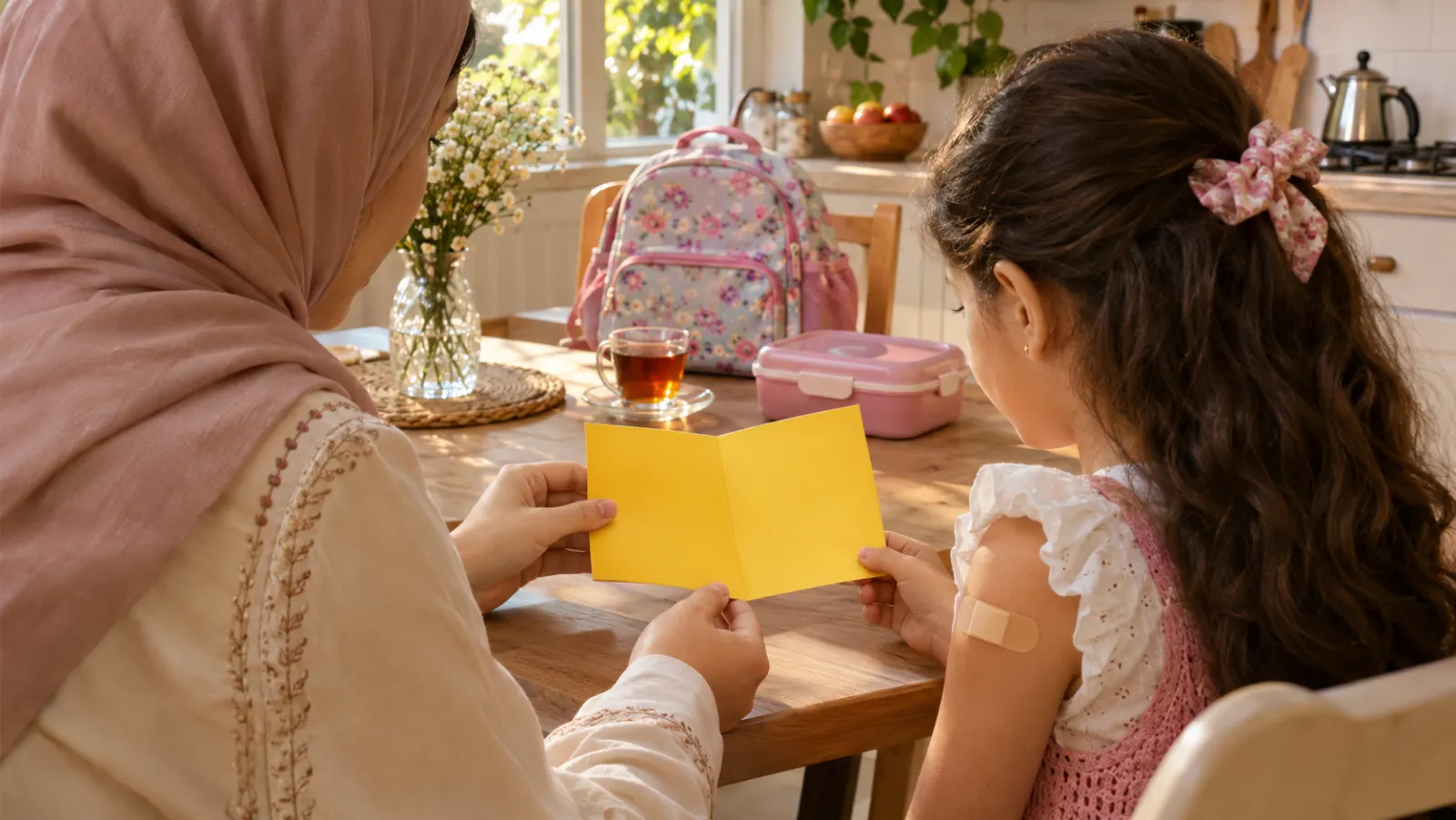
Every fall, a familiar envelope lands in mailboxes across Toronto. It comes from public health, and it says something along the lines of: your child’s immunization record is incomplete, and they may be suspended from school if it is not updated. For many parents, the first reaction is alarm. The second is confusion, because they are fairly sure their child had all their shots.
Often, the child did. The problem is that the vaccines were given, but nobody told public health. In Ontario, doctors’ offices do not automatically send vaccine records to the school system. That job falls to parents. Other times, a child really is missing a dose or two, perhaps because of a move, a missed appointment during a busy year, or because they started their vaccines in another country with a different schedule.
Whatever the reason, it is usually very fixable. This guide explains, in general terms, how school immunization requirements work in Ontario, how to keep your child’s record up to date, and how catch-up vaccines work for kids who are behind, including children who have recently arrived in Canada. It is written for the many families in Scarborough who are juggling school forms, work schedules, and sometimes paperwork in more than one language.
Why childhood vaccines matter
Vaccines train the immune system to recognize and fight specific infections before a child is exposed to them. The diseases they prevent, such as measles, whooping cough, polio, and meningitis, were once common causes of serious illness and death in children. They have not disappeared worldwide. Measles in particular spreads extremely easily and can still show up in Canadian communities when travellers bring it home and it reaches people who are not protected.
Vaccinating your child protects them directly. It also helps protect babies too young for some vaccines, children with weakened immune systems, and older relatives. In multigenerational households, which are common in Scarborough, that wider circle of protection really matters.
Ontario’s school immunization rules, in plain language
Ontario has a law, the Immunization of School Pupils Act, that requires children attending school to be immunized against a list of specific diseases, or to have a valid exemption on file. The local public health unit, which for Scarborough is Toronto Public Health, is responsible for keeping records and following up when they are incomplete.
The diseases covered by the school requirement include, broadly:
- Diphtheria
- Tetanus
- Polio
- Measles
- Mumps
- Rubella
- Whooping cough (pertussis)
- Meningococcal disease
- Chickenpox (varicella), for children born in more recent years
The exact number of doses needed depends on the child’s age and when they started their vaccines. Public health and your clinician can tell you precisely what your child needs, and they follow the current Ontario schedule, which is updated from time to time.
What about exemptions?
Ontario allows exemptions for medical reasons, completed by a physician or nurse practitioner, and also for reasons of conscience or religious belief, which involve a specific process set out by the province. If you are considering an exemption, it is worth talking it through with your clinician first. Children who are not immunized may be excluded from school during an outbreak of a disease they are not protected against, for their own safety.
What about daycare?
Licensed child care settings in Ontario also require immunization information. If your child attends daycare, the centre will likely ask for a copy of their record.
Keeping the record up to date
Here is the step that trips up the most families: when your child gets a vaccine at a doctor’s office or clinic, you usually need to report it to public health yourself.
That is true even if the shot was given right here in Scarborough, and even if you have a family doctor who has been giving every vaccine since birth. It is not automatic.
How to report
Toronto Public Health provides ways for parents to submit their child’s immunization information, including online reporting. You will typically need:
- Your child’s name, date of birth, and health card number
- The name of each vaccine and the date it was given
- Your child’s school
If your child already has a record with public health, you may have received a notice or an identification number that helps you find it.
Keep your own copy
The old yellow immunization card is still one of the most useful documents a family can keep. Ask for vaccines to be recorded on it at every visit, and store it somewhere safe with passports and birth certificates. Take a photo of it on your phone too. Our childhood vaccinations visits can include recording doses on your child’s card so you have what you need to report them.
When the letter arrives
If you receive a notice that your child’s record is incomplete, do not panic, and do not ignore it.
- Read it carefully. It usually lists which vaccines are missing from the record.
- Check your own copy. If your child already had those doses, report them to public health with the dates.
- If you cannot find records, contact the clinic or doctor who gave the vaccines and ask for a printout.
- If doses really are missing, book an appointment to get them, and then report the new doses.
- Watch the deadline. The notice will say when the record needs to be updated.
It is much easier to sort this out over the summer or early in the school year than in the days before a suspension date, when clinics and public health are at their busiest.
The routine childhood schedule, in general terms
Ontario’s publicly funded schedule is designed to protect children at the ages when they are most vulnerable. Broadly speaking:
- Infancy (the first 18 months): a series of vaccines given at regular well-baby visits, protecting against diseases such as diphtheria, tetanus, whooping cough, polio, Haemophilus influenzae type b, pneumococcal disease, rotavirus, meningococcal disease, measles, mumps, rubella, and chickenpox.
- Around school entry (age 4 to 6): booster doses to top up protection before kindergarten or Grade 1.
- Grade 7: vaccines usually offered through school-based clinics run by public health, including protection against hepatitis B, HPV, and meningococcal disease.
- Teen years: a booster against tetanus, diphtheria, and whooping cough.
The seasonal flu shot and COVID-19 vaccines are also recommended for many children. Your clinician can confirm the right timing for your child, and our well-baby visits are a natural time to keep infants on track.
Catch-up vaccines for kids who are behind
Falling behind is common and not a reason for guilt. Families move, children get sick on appointment days, and the pandemic years disrupted routine care for many households. The good news is that most vaccines can be caught up safely, and in most cases, a child does not need to restart a series from the beginning.
A catch-up plan usually involves:
- Reviewing every record available, from Ontario and anywhere else the child has lived
- Comparing it to the Ontario schedule for the child’s current age, since the number of doses needed can change as children get older
- Giving several vaccines at the same visit when appropriate, which is safe and gets children protected faster
- Scheduling follow-up doses at the right intervals
Our catch-up immunizations service is set up for exactly this kind of review.
Newcomer children: bringing their vaccine history with them
Scarborough welcomes many families from around the world, and their children often arrive with vaccines given under a different country’s schedule. Those vaccines generally count. The challenge is matching them up.
What to bring
- Any vaccine cards, booklets, or certificates from your home country or from other countries where you lived
- Records from refugee or immigration medical exams, if you have them
- Your child’s Ontario health card, or your documents if coverage is still being arranged
Records in other languages are very welcome; bring them even if they are handwritten or partly faded. Clinicians are used to reading records from many countries, and it often helps if a family member can help translate details like dates and vaccine names.
Common situations
- Different vaccines or combinations. Some countries use different combination products or schedules. Your clinician will work out which diseases have been covered.
- Missing vaccines. Some vaccines that are routine in Ontario, such as chickenpox or certain meningococcal vaccines, may not have been part of the schedule elsewhere.
- No records at all. If records were lost, a clinician will usually recommend vaccinating according to the catch-up schedule. Getting an extra dose of a vaccine is generally considered safe. In some situations, blood tests may be used to check immunity.
- Tuberculosis screening. Depending on where a child lived, screening may be recommended. This is different from vaccination and your clinician can explain whether it applies.
Newcomer children can usually start school while their vaccine catch-up is underway, as long as the family is working with public health and a clinician to complete it.
What to expect at a vaccine visit
Many children are nervous about needles, and many parents are nervous on their behalf. A few things can help:
- Be honest but calm. Telling a child “it will be a quick pinch, and I’ll be right here” is usually better than “it won’t hurt.”
- Bring comfort. A favourite toy, a tablet with a show, or a snack for afterward.
- Hold younger children in your lap for comfort and support.
- Ask about numbing cream or patches, which can be bought at pharmacies and applied ahead of time.
- Breastfeeding during shots can soothe babies.
Mild side effects are common and usually pass within a day or two: a sore arm, mild fever, fussiness, or tiredness. Some vaccines, like the measles-mumps-rubella vaccine, can cause a mild rash or fever a week or so later.
Call 911 if your child develops signs of a severe allergic reaction after a vaccine, such as swelling of the face or throat, trouble breathing, or widespread hives. These reactions are rare, and clinics monitor children for a short time after vaccination for this reason. Contact a clinician or Health811 if you are worried about a high fever, unusual crying that will not settle, or a reaction you are unsure about.
Questions are welcome
Parents often have questions about vaccine safety, ingredients, timing, or how many shots can be given at once. Those are fair questions. Social media is full of confusing claims, and it can be hard to know what to trust. A conversation with a clinician who knows your child is a better place to sort through them than a comment thread. Nobody at a good clinic should make you feel foolish for asking.
Getting your child’s vaccines up to date in Scarborough
Whether your child needs routine shots, a few catch-up doses, or just help making sense of a record from another country, HealthSmart Medical can help. Visit us at 2425 Eglinton Ave. East, Unit 12, call 416-757-7117, or book online. Bring every vaccine record you have, your child’s health card, and any letter from public health. Then, once the visit is done, remember the last step: report the new doses to public health so your child’s school record matches.
This article is for general information and is not a substitute for medical advice. If you have severe or worsening symptoms, call 911 or go to the nearest emergency department.