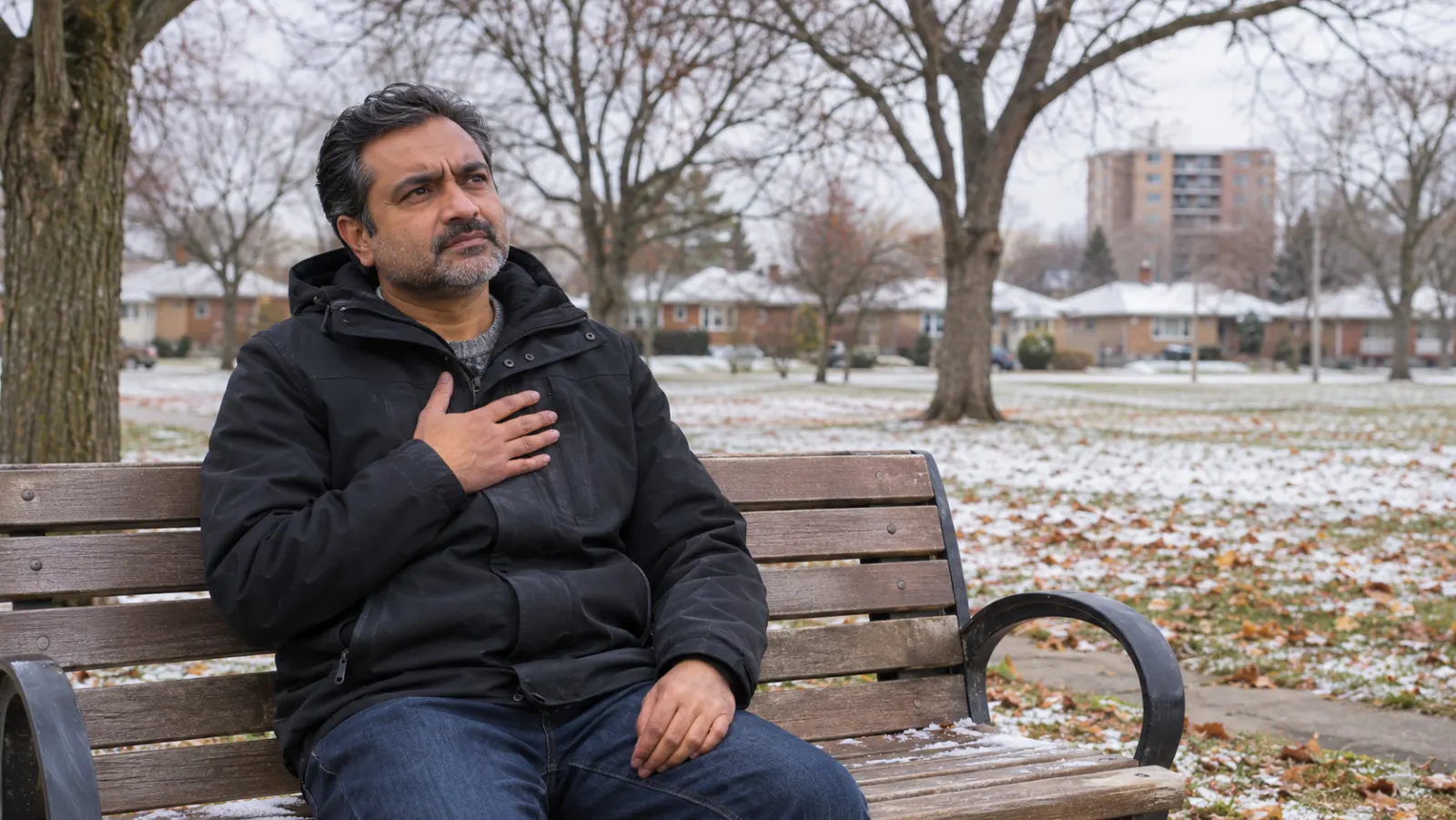
Few symptoms make people freeze quite like a pain in the chest. One moment you are carrying groceries up the stairs of your building or rushing for the bus on Eglinton, and the next you notice an ache behind the breastbone and a voice in your head asking, is this it? Most of the time the answer turns out to be no. Chest pain has dozens of causes, and many of them come from the muscles, the stomach, the lungs, or a surge of anxiety rather than the heart.
But “most of the time” is not good enough when the exception is a heart attack. The honest truth, and the reason this article exists, is that you cannot reliably tell the difference at home. Even experienced doctors need an exam, an ECG and often blood tests before they are confident. What you can learn is which patterns demand a 911 call right now, which can wait for a same-day visit, and how to describe your pain so the person examining you gets to the answer faster.
This is general information for adults in Scarborough. It is not a substitute for being assessed, and if anything here makes you wonder whether you should call an ambulance, that is a sign you probably should.
Call 911 now if any of this is happening
Start here, and do not read further if you are in the middle of it:
- Pressure, squeezing, tightness, heaviness or burning in the chest lasting more than a few minutes, or coming and going
- Pain spreading to the arm (either side), shoulder, neck, jaw or upper back
- Chest discomfort with shortness of breath, sweating, nausea, vomiting, or feeling faint
- Sudden, severe, tearing pain that goes through to the back
- Sudden sharp chest pain with breathlessness, especially after a long flight, surgery, a recent leg injury, or with one swollen calf
- Chest pain with a racing or very irregular heartbeat and dizziness
- Chest pain in someone with known heart disease that is different, longer or worse than their usual angina, or not settling with their prescribed nitroglycerin as directed
Call 911 rather than driving yourself or asking a family member to rush you to Scarborough General or another emergency department. Paramedics can do an ECG in your living room, start treatment on the way, and alert the hospital before you arrive. The dispatcher may tell you to chew an Aspirin if it is safe for you. Follow their instructions, unlock the door, and sit down.
Why women, older adults and people with diabetes get missed
The classic picture of a heart attack, a man clutching his chest and collapsing, has done a lot of harm. It teaches people to wait for something dramatic.
Women are more likely than men to have heart attacks that feel like something else: unusual fatigue for days beforehand, shortness of breath, nausea, indigestion, a pressure between the shoulder blades, or an ache in the jaw or throat. Some describe it as “just not feeling right” rather than pain. Older adults may mainly feel weak, confused or breathless. People living with diabetes can have reduced nerve sensation and may feel less pain than you would expect, sometimes almost none.
We see this pattern often in busy households. A mother or grandmother puts everyone else first, blames the heaviness on being tired or on last night’s meal, and lies down instead of calling. If you are the person who tends to minimise, give yourself permission to be the patient. If you live with someone like that, know the atypical signs well enough to make the call for them.
Common causes that are not the heart
Once a heart attack and other emergencies are ruled out, the most frequent explanations are surprisingly ordinary. Knowing them can take some of the fear out, though none of these should be self-diagnosed the first time.
Chest wall and muscle pain
The chest is a cage of ribs, cartilage and muscle, and all of it can be strained. Shovelling the first heavy snow of the season, a new workout, lifting a toddler or a box at a warehouse shift, or a hard coughing fit during a cold can all leave it sore.
Muscle and chest wall pain tends to:
- Hurt in a spot you can point to with one finger
- Get worse when you press on it, twist, or move your arm
- Feel sharp or achy rather than heavy or squeezing
- Be linked to something you did in the last day or two
Costochondritis, an inflammation where the ribs meet the breastbone, is a common version of this. It can be quite painful and can last for weeks, but it is not dangerous.
Reflux and other stomach causes
Acid coming up from the stomach can produce a burning feeling behind the breastbone that is easy to mistake for heart pain, and the reverse is also true. Reflux often shows up after a large or late meal, when lying down, or bending over, and may come with a sour taste or burping. If you already know you get heartburn, it is worth seeing a doctor anyway to confirm it, and our clinic can help with gastrointestinal concerns. A spasm of the oesophagus, gallbladder trouble, or a stomach ulcer can also cause pain in the lower chest.
One caution: antacids that seem to help are not proof that the pain was from your stomach. Heart pain sometimes eases on its own at the same moment you happen to take a tablet.
Anxiety and panic
A panic attack can bring on chest tightness, a pounding heart, tingling hands, shaky breathing and a powerful sense of doom. It is genuinely frightening, and it is not “all in your head” — the physical sensations are real, driven by stress hormones and fast breathing.
Panic is a diagnosis that should be made after other causes are considered, not before. People with anxiety can also have heart disease, and the first time you have symptoms like this you should be checked. Once a doctor has examined you and you have a pattern that is clearly linked to anxiety, treatment and coping strategies can make a big difference.
Lungs and the lining around them
Chest infections and pneumonia can cause pain that sharpens with each deep breath or cough, usually with fever and a productive cough. Pleurisy, inflammation of the lining around the lungs, causes a stabbing pain on breathing in. A collapsed lung (pneumothorax) causes sudden one-sided pain and breathlessness, and is more common in tall, thin young people and smokers. A blood clot in the lung is an emergency, as noted above.
Shingles
Before the rash appears, shingles can cause burning or tingling pain in a band on one side of the chest. A day or two later, blisters show up along the same strip of skin.
How heart pain usually behaves
There is no perfect rule, but cardiac pain tends to share some features. It is more often described as pressure, tightness or heaviness than as a sharp jab. It is often spread over an area rather than in one precise spot. It may come on with exertion, cold air or emotional stress and ease with rest. It can travel into the arm, neck or jaw.
Stable angina is chest discomfort that appears predictably with effort, such as climbing a hill or walking quickly into a cold wind, and settles within minutes of rest. It is a sign that the heart’s arteries are narrowed and needs a prompt medical assessment, ideally within days, not months.
Unstable angina is when that pattern changes: it comes on with less effort, lasts longer, or happens at rest. Treat that as an emergency.
What to tell the doctor
Whether you are speaking to a paramedic, an emergency physician or a clinic doctor, the details you give shape what happens next. Clinicians often think in terms of a few simple questions, and having your answers ready saves time.
Describe the pain itself
- Where exactly is it? Can you point to it with one finger, or is it a broad area?
- What does it feel like? Pressure, squeezing, burning, stabbing, aching, tearing?
- Does it travel anywhere — arm, jaw, back, stomach?
- How long does each episode last? Seconds, minutes, hours, constant?
- What brings it on? Exercise, meals, lying flat, breathing in, pressing on it, stress?
- What makes it better? Rest, sitting forward, antacids, nothing?
- What else happens alongside it? Sweating, nausea, breathlessness, palpitations, fever, cough?
Give the background
- Your age and any known conditions, especially high blood pressure, diabetes, high cholesterol, or kidney disease
- Whether you smoke or vape, or have in the past
- Heart disease or sudden death in parents, brothers or sisters, and roughly at what age
- All medications, including over-the-counter pills, herbal remedies and anything brought from abroad
- Any recent long trips, surgery, injury, or a new or changed medication
- For women, whether you are pregnant or recently gave birth
If English is not your first language, or an older relative is the patient, it helps to bring someone who can translate and who knows the medical history. Writing the key points on your phone in advance is a simple way to make sure nothing is forgotten in a stressful moment.
What testing may involve
For anyone with possible heart pain, an ECG is usually the first step. It takes a few minutes, is painless, and can show signs of a heart attack, rhythm problems or strain. Our clinic offers ECG testing for appropriate situations, but for active, severe or ongoing chest pain the right place is the emergency department, where blood tests for heart muscle damage can be done and repeated over several hours.
For pain that has settled and is not an emergency, a doctor may order:
- Blood work, such as cholesterol, blood sugar, kidney function and a blood count
- A chest X-ray if the lungs or ribs are a concern
- Referral for an exercise stress test, a heart ultrasound (echocardiogram), or a heart rhythm monitor
- A referral to a cardiologist or gastroenterologist, depending on the findings
A normal ECG on a day when you feel fine does not completely rule out heart disease. That is why the description of your symptoms, and your risk factors, still carry so much weight.
When a clinic visit makes sense
A walk-in or same-day visit is reasonable for chest pain that is clearly mild, is not happening right now or has a likely explanation, and has none of the red flags listed earlier. Examples include:
- A sore spot on the ribs after shovelling or a fall, that hurts when you press on it
- Burning after meals that keeps coming back
- Brief, sharp twinges that last a second or two and have been checked before
- Chest discomfort that only appears with brisk effort and settles quickly with rest, and has not changed — this still needs a visit within days
If you are unsure, call 911 or Health811 (dial 811) to speak with a registered nurse rather than guessing. Our same-day medical appointments and walk-in clinic can assess non-urgent chest symptoms and arrange follow-up testing when needed.
Late autumn in Scarborough: a few practical reminders
November brings the first real cold snaps and, often, the first snowfall. Cold air narrows blood vessels and makes the heart work harder, which is why some people with narrowed arteries notice symptoms for the first time when they step out into a wind off the lake. Pace yourself on that first shovelling job, push snow rather than lifting it, and stop if you feel any chest pressure.
It is also the season of colds and coughs. A chest that aches from a week of coughing is usually muscular, but persistent fever, breathlessness or pain with each breath deserve a look.
Getting checked in Scarborough
Chest pain deserves respect without panic. When the warning signs are there, call 911 and let the emergency team do their work. When the pain is milder, recurring, or you simply want answers, a calm clinical visit is a good next step, and our heart health monitoring visits can help if you have risk factors you want to stay on top of.
HealthSmart Medical is at 2425 Eglinton Ave. East, Unit 12, in Scarborough. Call 416-757-7117 or book online for an assessment. And if your chest pain feels heavy, spreading, or comes with sweating or breathlessness, put down this article and call 911.
This article is for general information and is not a substitute for medical advice. If you have severe or worsening symptoms, call 911 or go to the nearest emergency department.