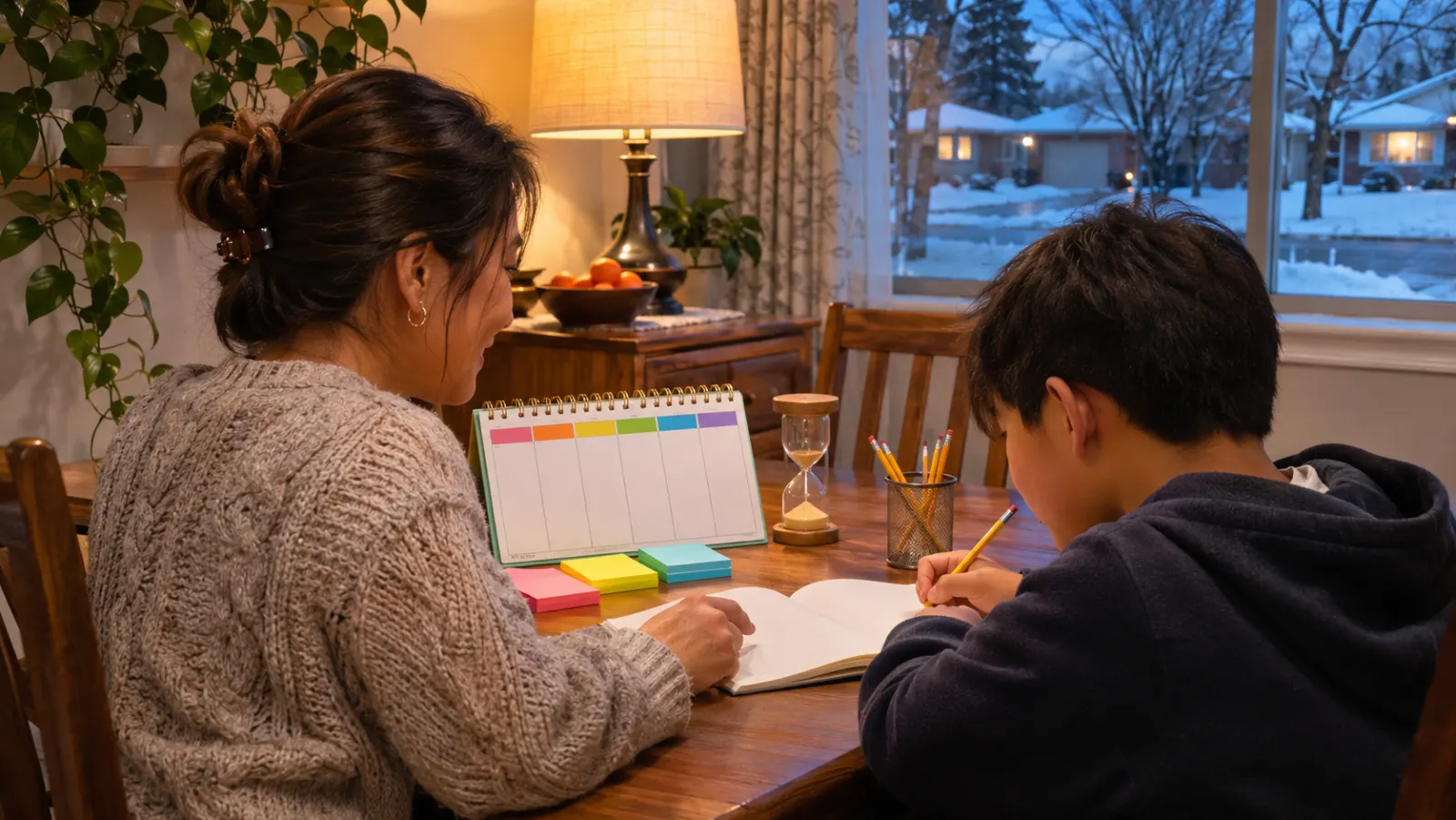
Some parents first wonder about ADHD after the third phone call from school in a month. Others notice it at home: the homework that takes three hours instead of thirty minutes, the coat left at the bus stop again, the child who is bright and funny and yet somehow cannot get through a morning routine without five reminders. And a growing number of adults start asking the question about themselves, often after one of their own children is diagnosed and the description sounds uncomfortably familiar.
Attention-deficit/hyperactivity disorder, or ADHD, is one of the most common neurodevelopmental conditions, and it is also one of the most misunderstood. It is not caused by bad parenting, too much sugar or too much screen time. It is not a lack of intelligence or effort. And it is not something that only affects hyperactive young boys. ADHD shows up in girls and women, in quiet daydreamers, in high achievers who are exhausted from compensating, and in adults who were never assessed as children.
This article is a starting point for families and adults in Scarborough who want to understand what ADHD looks like, how an assessment works in Ontario, what supports schools can offer, and what treatment options exist. It cannot tell you whether you or your child has ADHD. That takes a proper assessment. But it can help you walk into that conversation better prepared.
What ADHD actually is
ADHD is a difference in how the brain develops and manages what are often called executive functions: the mental skills that let us pay attention on purpose, hold information in mind, organize tasks, control impulses, manage time, and regulate emotions. Everyone struggles with these things sometimes. In ADHD, the difficulties are persistent, start in childhood, show up in more than one setting, and cause real problems in daily life.
ADHD tends to run in families, and genetics play a large role. Being born early or with a low birth weight is also associated with a higher risk.
The three presentations
Clinicians generally describe ADHD in three ways, depending on which symptoms are most prominent:
- Predominantly inattentive: difficulty sustaining attention, forgetfulness, losing things, being easily distracted, struggling to follow through on instructions. These children are often described as “dreamy” and are easily missed, particularly girls.
- Predominantly hyperactive-impulsive: constant motion, fidgeting, interrupting, difficulty waiting, acting before thinking.
- Combined: a mix of both, which is the most common presentation.
The presentation can change as a person grows. Many hyperactive children become teens and adults whose restlessness is more internal, a busy mind rather than a body running around the classroom.
Signs that might point to ADHD
In young children and school-aged kids
- Seems not to listen when spoken to directly, even when not distracted by anything obvious
- Starts tasks but rarely finishes them; moves from one activity to another
- Frequently loses school supplies, mittens, water bottles and homework
- Makes careless mistakes despite understanding the material
- Has trouble staying seated during meals or class
- Blurts out answers, struggles to take turns, interrupts conversations and games
- Big emotional reactions and difficulty calming down
- Reports from more than one teacher or caregiver describing similar concerns
In teens
- Falling grades, especially as workloads grow in middle school and high school and the structure of elementary school falls away
- Chronic lateness and missed deadlines
- Procrastination followed by frantic all-nighters
- Impulsive decisions, including risky driving or substance use
- Frustration, low self-esteem, or a sense of being “lazy” or “stupid” despite trying hard
In adults
Adult ADHD often looks different from the childhood version. Common experiences include:
- Difficulty starting boring tasks, even when they are important, like taxes or forms
- Constantly running late; underestimating how long things take
- Losing keys, wallet or phone repeatedly
- Struggling to keep track of bills, appointments and emails
- Restlessness, difficulty relaxing, or needing to stay busy
- Interrupting others, impulsive spending, or changing jobs frequently
- Feeling chronically overwhelmed and behind
Things that can look like ADHD
Many other conditions can affect attention and behaviour, and some commonly exist alongside ADHD. These include anxiety, depression, learning disabilities, autism, sleep problems (including sleep apnea), hearing or vision problems, thyroid conditions, trauma, and the effects of stress at home. A newcomer child adjusting to a new language and school system can also appear distracted or withdrawn when the real issue is the enormous transition they are going through. A good assessment looks for these possibilities rather than jumping to a label.
How assessment works
There is no single blood test or brain scan that diagnoses ADHD. Assessment is a careful process of gathering information about a person’s development, behaviour and functioning across different settings.
Starting with your family doctor
For many families in Scarborough, the first step is a visit to a family doctor. At that appointment, the doctor will usually:
- Take a detailed history: pregnancy and birth, early development, school or work performance, sleep, mood, and family history
- Do a physical examination, including checking hearing and vision where needed
- Ask about other possible explanations for the symptoms
- Provide standardized questionnaires, sometimes called rating scales, for parents, teachers or the adult patient to complete
It helps to bring report cards, any teacher comments, and examples of the challenges you are noticing. For an adult, old report cards or input from a parent or partner who knew you as a child can be valuable, because ADHD symptoms must have begun in childhood.
Who can diagnose
In Ontario, ADHD can be diagnosed by physicians, including family doctors with experience in ADHD, paediatricians and psychiatrists, as well as by psychologists. Depending on the situation, your family doctor may carry out the assessment, or recommend a specialist referral to a paediatrician, psychiatrist, or other professional. Wait times for specialist assessment can vary considerably, so it is worth starting the process early.
Psychoeducational assessments
Sometimes a psychoeducational assessment by a psychologist is recommended, especially when a learning disability might be involved alongside or instead of ADHD. These detailed assessments measure thinking skills, academic achievement and attention. They may be available through the school board, though there can be waiting lists, or privately, in which case they are usually not covered by OHIP. Some workplace or private insurance plans cover part of the cost, so check your benefits.
Supports at school
A diagnosis is not required for a child to get help at school, but it can make the conversation more focused. Ontario schools have formal ways of supporting students with learning needs.
Starting the conversation
Begin with your child’s teacher. Ask what they are seeing in class and share what you see at home. Often, simple strategies can be put in place right away:
- Seating near the teacher and away from doors or windows
- Breaking assignments into smaller chunks with checkpoints
- Written instructions alongside spoken ones
- Movement breaks and permission to use fidget tools
- Extra time for tests or a quieter space to write them
- A shared planner or agenda that goes between home and school
Formal planning
If more structured support is needed, ask the school about an Individual Education Plan (IEP). An IEP is a written plan describing the accommodations, and in some cases modified expectations, a student needs. The school may also involve the special education resource teacher or other school board staff. Your child’s principal or teacher can explain how the process works in your school.
Parents who are new to the Ontario school system sometimes hesitate to ask for these supports, worried that it will mark their child. In reality, accommodations are common, they are designed to give students a fair chance to show what they know, and they are reviewed regularly.
Treatment options
ADHD treatment is individual. The best plan depends on age, the main challenges, other health conditions, family preferences, and what is happening at school or work. Most effective plans combine more than one approach.
Education and understanding
Learning about ADHD is a treatment in itself. When a child, parent or adult understands why certain things are hard, it reduces blame and makes it easier to find strategies that fit.
Behavioural and skills-based approaches
- Parent training programs teach practical strategies for structure, routines, clear instructions, consistent consequences, and positive reinforcement. For preschoolers, this is generally the first recommended treatment.
- Organizational and executive function coaching helps older children, teens and adults build systems for time management and planning.
- Cognitive behavioural therapy (CBT) can be helpful for teens and adults, especially when anxiety, low mood or self-esteem are part of the picture.
Medication
For school-aged children, teens and adults, medication can be very effective at improving focus and reducing impulsivity. There are two main groups:
- Stimulant medications are the most commonly used. They have been studied extensively over many decades. Long-acting versions are often preferred so that a single morning dose covers the school or work day.
- Non-stimulant medications are an option for people who do not respond well to stimulants, experience side effects, or have certain other health conditions.
Common side effects can include reduced appetite, trouble falling asleep, headaches or stomach aches, and in children, the doctor will keep an eye on growth. Blood pressure and heart rate are checked regularly. Your prescriber will usually start with a low dose and adjust gradually, and follow-up visits are an important part of finding the right fit.
Many parents worry that medication will change their child’s personality or lead to addiction. These are reasonable questions to raise with your doctor. When ADHD medication is properly prescribed and monitored, it should help a child feel more like themselves, not less. If a child seems flat or not themselves, that is a sign the dose or medication needs adjusting.
Coverage varies depending on age and whether you have private insurance. Your pharmacist can help you understand what your plan or the provincial drug programs cover.
Healthy foundations
Sleep, regular physical activity, consistent meals and reasonable limits on screens late at night do not cure ADHD, but they make every other part of the plan work better. Scarborough winters can make outdoor activity harder, so look for indoor options, whether a community centre program, a swimming lesson, or a family walk at the mall on the coldest days.
Adult ADHD deserves attention too
Many adults with ADHD grew up being called disorganized, lazy or careless. Some have built elaborate coping systems; others have struggled with jobs, relationships, finances and self-esteem for years without knowing why.
An adult assessment follows similar steps: a detailed history, rating scales, and a careful look at other conditions such as depression, anxiety, sleep disorders or substance use. Treatment for adults also combines education, practical strategies, therapy where helpful, and sometimes medication.
It is never too late to seek an assessment. Adults often describe getting a diagnosis as a relief, a new understanding of a lifelong pattern rather than a label.
Safety notes for adults
- Untreated ADHD is linked with a higher risk of driving collisions. If you have ADHD, talk with your doctor about driving safety.
- Do not take ADHD medication prescribed for someone else, and keep stimulant medication stored securely at home, especially if there are teenagers in the house.
- If you are experiencing thoughts of self-harm or feel unable to cope, call or text 9-8-8, the Suicide Crisis Helpline, or go to the nearest emergency department.
Taking the first step in Scarborough
If ADHD is on your mind, for your child or for yourself, a conversation with a family doctor is a good place to start. At HealthSmart Medical, our team can review your concerns, look at other possible causes, start the assessment process, and help with specialist referrals when they are needed. We also offer growth and development assessments for children and adolescent healthcare for teens who would like a confidential space to talk.
Visit us at 2425 Eglinton Ave. East, Unit 12, call 416-757-7117, or book online. Bring your questions, your notes, and those report cards. We will take it from there together.
This article is for general information and is not a substitute for medical advice. If you have severe or worsening symptoms, call 911 or go to the nearest emergency department.